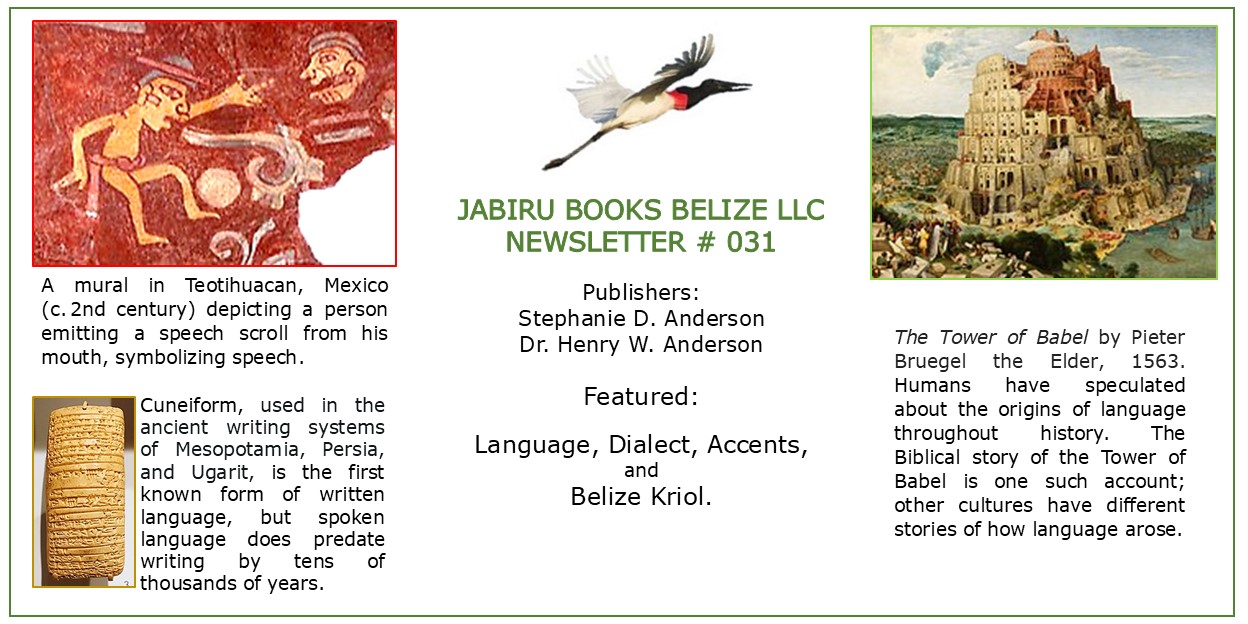
 LANGUAGE 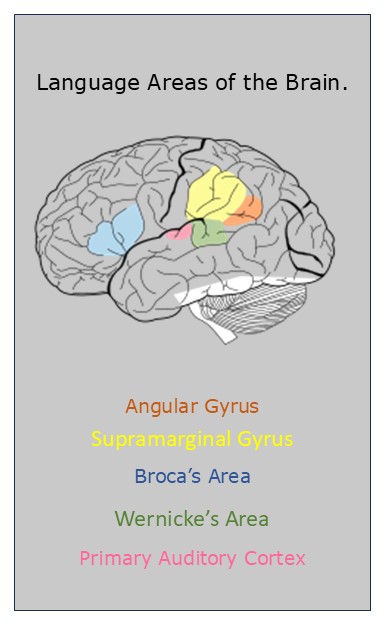 Human Language is the principal method of human communication, consisting of grammar and vocabulary, of words used in a structured and conventional way and conveyed by speech, writing, or gesture. It is characterized by its cultural and historical diversity, with significant variations observed between cultures and across time. Human languages possess properties which enable the creation of an infinite number of sentences and the ability to refer to objects, events, and ideas that are not immediately present in the discourse. Estimates of the number of human languages in the world vary between 5,000 and 7,000. Precise estimates depend on an arbitrary distinction (dichotomy) established between languages and dialects. Natural languages are spoken, signed, or both; however, any language can be encoded into secondary media using auditory, visual, or tactile stimuli – for example, writing, whistling, signing, or braille. The brain is the coordinating center of all linguistic activity; it controls both the production of linguistic cognition and of meaning and the mechanics of speech production. Nonetheless, our knowledge of the neurological bases for language is quite limited, though it has advanced considerably with the use of modern imaging techniques. The discipline of linguistics dedicated to studying the neurological aspects of language is called neurolinguistics. DIALECT A dialect is a variety of language spoken by a particular group of people. It can also refer to a language subordinate in status to a dominant language and is sometimes used to mean a vernacular language. Vernacular is the ordinary, informal, spoken form of language, particularly when perceived as having lower social status or less prestige than standard language which is more codified, institutionally promoted, literary, or formal. Regardless of any such stigma, all nonstandard dialects are full-fledged varieties of language with their own consistent grammatical structure, sound system, body of vocabulary, etc. The more common usage of the term in English refers to a variety of a language that is a characteristic of a particular group of the language's speakers. The dialects or varieties of a particular language are closely related and, despite their differences, are most often largely mutually intelligible, especially if geographically close to one another. The term is applied most often to regional speech patterns, but a dialect may also be defined by other factors, such as social class or ethnicity. A dialect associated with a particular social class is called a sociolect; one associated with a particular ethnic group is an ethnolect; and a geographical or regional dialect is a regiolect. Any variety of a given language can be classified as a "dialect", including standardized ones. A standardized dialect is any language variety that has undergone substantial codification of its grammar, lexicon, writing system or other features and that stands out among related varieties in a community as the one with the highest status or prestige. Often, it is the prestige language variety of a whole country. In linguistics, the process of a variety becoming organized into a standard, for instance by being widely expounded in grammar books or other reference works, and also the process of making people's language usage conform to that standard, is called standardization. The Three Main Differences Between Languages and Dialects The basic idea is that a language refers to a system of communication with its own unique grammar and vocabulary, often recognized as having distinct cultural or national identity. A dialect, however, is a variant of a language spoken in a specific region or by a particular social group, differing primarily in pronunciation, vocabulary and grammar, but it is still mutually intelligible with the dominant language spoken in the area. 1. Languages have a country, are national, while dialects are said to be regional and are often spoken by a fewer number of people. Each country has at least one official language that is used in official documents and government activities. A dialect, however, can become a language by decree or declaration—the state gives special status to a spoken system as an official language. In other words, a language is considered a language because it has been endorsed by the state. 2. Languages have standard written forms, while dialects are mostly oral. Languages have standard grammar rules and abundant supplies of literature. They exist not only as spoken traditions but also as written records. Dialects, on the other hand, are usually spoken more than written. If they are written, it’s usually not in official or national documents. 3. Languages are qualitatively different from dialects. Many claim that languages are just inherently more elegant or sophisticated than dialects, but if you judge this sophistication by the evolved difficulty, complexity, tonicity, number of characters and phonemes, of the language, that is not so. ACCENTS An accent is a subset of a dialect, a way of speaking typical of a particular group of people and especially of the residents of a region. Accents are interesting studies because they organize speakers into their respective geographies. Words and sentences that look the same might come out very differently when spoken by people from two different regions. With English alone, you already have so many accents. An American can barely understand a Scot, for example, even though they’re speaking the same language. Each of these, in turn, have their own regional variants. The American accents, for example, are Deep Southern, Texan, New York, Boston, California and many more. It is interesting to note that most speakers claim their accent is the “correct” way of pronouncing words. While one’s accent may have some social, economic or geopolitical ramifications, all accents are equal, everyone has an accent, and they all sound beautiful. From Language vs Dialect: What’s the Difference? Stevie Tan. Published: 27 Feb 2024 https://www.fluentu.com/blog/learn/difference-between-language-and-dialect/ BELIZE KRIOL Many languages are spoken in Belize, and these include English which is the Official Language, Spanish, Kriol (Creole), K’ekchi’ Maya, Mopan Maya, German, Garifuna, and others. Kriol has been included in the preceding list of languages but is a variety of the English language, a dialect, and it is widely spoken. Historically, Kriol was spoken only in Belize Town, now Belize City, and in the Belize River Valley area. It is now spoken throughout the country, but the majority of speakers remain within the Kriol population. There have been efforts over recent years to have Kriol become a ‘standardized dialect.’ This would require substantial codification of its grammar, lexicon, writing system, and other features. Belize Kriol is beautiful, dynamic, colourful, alive, free. It is spoken from proud Rio Hondo to old Sarstoon, its main purpose being oral communication. Within the different regions of Belize, however, there are variations in words, accents, tonality, and so forth because of the languages spoken by different ethnic groups. There is a freedom not held in by the constraints of spelling and grammar. These variations within Belize Kriol, brought about because of the many different peoples of Belize, are what makes Belize Kriol alive, vibrant. It is also for this reason why Belize Kriol cannot be recognized as having a distinct cultural or national identity. Working towards making Belize Kriol a ‘standardized dialect’ is very worthwhile and should be continued. Over standardization, however, will take away its freedom and much will be lost. Download the Kriol-Inglish Dikshineri: https://www.scribd.com/document/329005060/Belize-Kriol-English-Dictionary  If you know someone who would like to receive our monthly Newsletter, please have them go to CONTACT at our website and send us an e-mail: http://jabirubooksbelize.com Please note that our Newsletters are also published on our FaceBook page at: https://www.facebook.com/JabiruBooksBelize Thank you for forwarding this Newsletter. BOOKS WRITTEN BY DR. HENRY W. ANDERSON 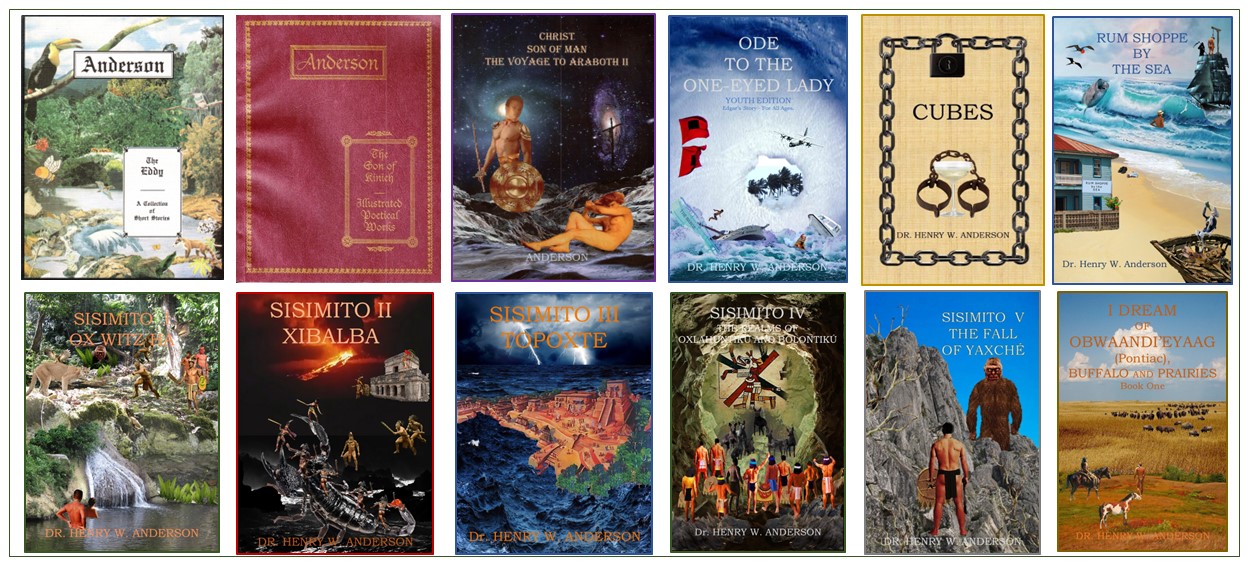 Are you looking for novels, short stories, poems, you will find nowhere else, a book like CUBES that explores USA Society, books that will take you from the depts of space to the eye of a hurricane? Or, perhaps, you would like to sail with the sea captains of Belize as they face violent storms, ghost ships, and specters on lonely islands. The great Sisimito Series invites you to live an unforgettable adventure within the pristine jungles of Belize, the dangerous world of Sisimito and the Jungle folk, the magnificent city of Ox Witz Ha and the Maya Civilization. Soon to be published is Dr. Henry W. Anderson’s latest book which brings to you the mythology, battles, and struggles of the Indigenous Nations of North America in an outstanding adventure. Dr. Henry W. Anderson’s books are available as E-books and Print-on-Demand at store.bookbaby.com (BookBaby Bookshop), recommended, and other worldwide retailers: For store.bookbaby.com, go to: https://store.bookbaby.com/profile/jabirubooksbelizecom Please visit our website at http://jabirubooksbelize.com Add these great books to your personal library for your reading pleasurer in 2025 Soon to be released: SISIMITO V - THE FALL OF YAXCHÉ; The final book of the extraordinary Sisimito Series. I DREAM OF OBWAANDI’EYAAG (PONTIAC), BUFFALO AND PRAIRIES. BOOK ONE. INFORMATION/LINKS The works by Dr. Henry W. Anderson are available at the libraries of the Belize National Library Service and Information System. For more information, please go to: https://www.bnlsis.org/ Once on the website, you may go to ‘Public Library Catalogue’ then to ‘Subject;’ select ‘Author’ and put in Henry Anderson; or use the link below to go directly to Dr. Anderson books: https://bnlsis.mlasolutions.com/m5/catalog/(S(tsaodaxofc2mvp3zhpl4wwt2))/Default.aspx?internal=1&installation=LeoBradley Dr. Henry W. Anderson books are also available as E-books and Print-on-Demand at store.bookbaby.com (BookBaby Bookshop), recommended, and other worldwide retailers: E-Book Retailers: Amazon, Barnes & Noble, Apple Books, Vearsa, Kobo, OverDrive, Copia, Gardners Books, Baker & Taylor, eSentral, Scribd, Ciando, hoopla, Playster, and many more. Print-on-Demand Retailers: Amazon, Barnes & Noble, Powell’s and thousands of other stores and wholesale bookstore catalogs like Ingram and Baker & Taylor, around the world. For store.bookbaby.com, go to: https://store.bookbaby.com/profile/jabirubooksbelizecom Visit us at: https://www.facebook.com/JabiruBooksBelize Visit our website at http://jabirubooksbelize.com 
|