|
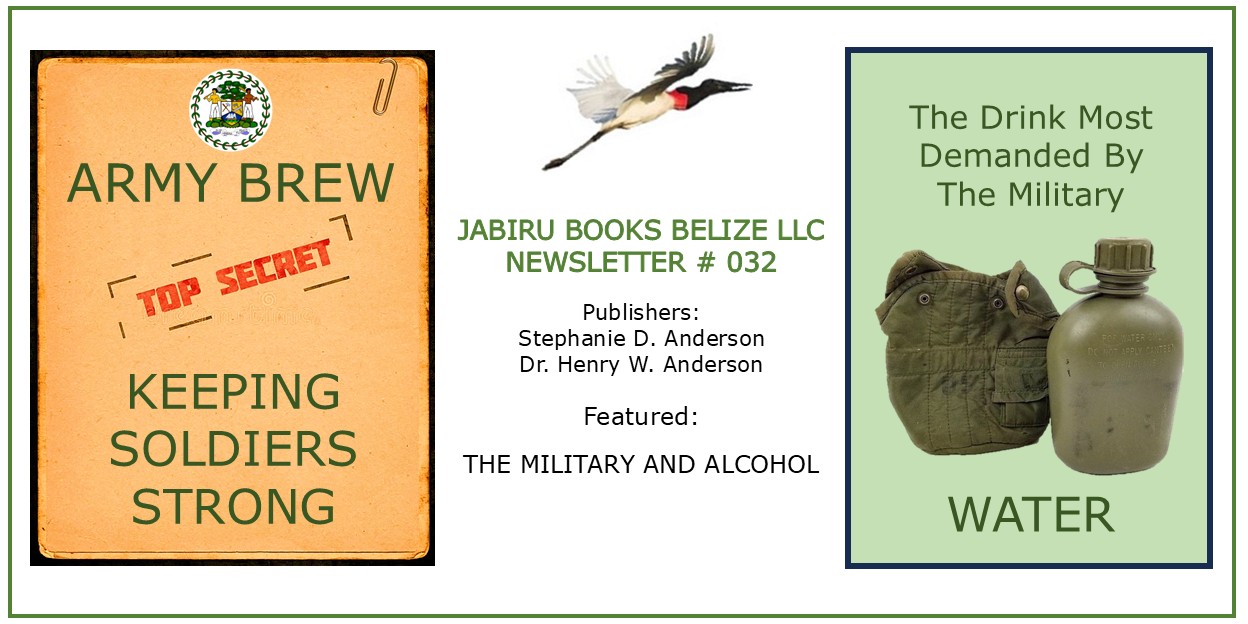 ALCOHOL USE AND THE MILITARY Since the earliest recorded history, Soldiers and warfare have been depicted in countless works, including songs, folk tales, stories, memoirs, biographies, novels and other narrative fiction, drama, films, and more recently television and video, comic books, graphic novels, and games. Often these portrayals have emphasized the heroic qualities of Soldiers in war, but at times have emphasized war's inherent dangers, confusions, trauma, and their effect on individual Soldiers and others. The earliest signs of human alcohol consumption extend back 100,000 years to Paleolithic humans fermenting fruit. Alcohol consumption is deeply rooted in human society, arguably, more so in the military. People drink for many reasons. According to a wide number of studies, consuming alcoholic drinks, such as wine, in moderation is considered beneficial to your health. Alcohol can bring people together, serving as a social lubricant. A gathering of Soldiers from diverse backgrounds can be awkward until they have a few drinks. One of the most common reasons Soldiers drink is stress relief. A high training and operations pace, war, can create a stressful working environment for many Soldiers. That increased stress leads to alcohol consumption. Alcohol glamorization and overconsumption among Soldiers may lead to adverse effects on unit readiness and discipline, also increased health and legal issues. Military Leaders can curb that glamorization by fostering an ethical ‘command climate’. A ‘command climate’ is set by what the Leaders say and do. They must set the example. Soldiers watch their leaders and follow the examples they set. Equally important, the Leader must set the standard and enforce the standard. Soldiers may have various motivations for voluntarily enlisting and remaining in an army or other armed forces branch. They should be viewed primarily as willing participants who see themselves as engaged in a distinct and honourable activity. Soldiers volunteer for armed service, especially in time of war, out of a sense of patriotic duty to their Nation or to advance a social, political, or ideological cause. In times of economic hardship, improved levels of remuneration or training might be more of an incentive. Soldiers might also enlist for personal reasons, such as following family or social expectations, or for the order and discipline provided by military training, as well as for the friendship and connection with their fellow Soldiers afforded by close contact in a common enterprise. In general, Soldiers join the Army for family, institutional, and occupational reasons, and many value the opportunity to become a military professional. They value their relationships with other Soldiers, enjoy their social lives, and are satisfied with Army life. Alcohol has played a prevalent and historic role in military life where it has been used as a means of mediating stress, both in theatre and in the aftermath of battle. Used in social bonding and comradeship, drinking has become a common and accepted behaviour in military culture, surpassing alcohol use in the general population. Soldiers often use alcohol in an attempt to cope with stress, boredom, loneliness, and the lack of other recreational activities. Alcohol may serve as a coping mechanism after traumatic events and where deployment has been associated with increased rates of alcohol use or problem drinking. The easy availability of alcohol, ritualized drinking opportunities, and inconsistent policies contribute to a work culture that facilitates heavy and binge drinking among Soldiers. Yes, heavy alcohol use is a significant problem in the military. Drinking to excess may have a negative impact on mental and physical health, functional impairment, troop readiness, suicidal ideation, and the perpetrator in military sexual assaults. Furthermore, excessive drinking can undermine operational effectiveness, leave Soldiers unfit for duty, and damage trust and respect within the team. However, is banning alcohol use in military compounds the answer to excessive alcohol consumption among Armed Forces personnel, or is it simply a negative response which in effect does not resolve the issues encouraging heavy alcohol use? Does a ban simply send heavy alcohol use beyond the gates of the barracks into the general public where incidents between Soldiers and the public are more likely to occur? In fact, heavy alcohol use in military compounds may actually indicate that programs are not in place to assist Soldiers in avoiding heavy drinking, in making them aware of the dangers and consequences not only to their health but to their military duties and career. Is a ban simply a hood that covers existing issues and concerns being overlooked within the military? Rather than a ban, recommendations support the use of alcohol screening tools, the provision of education and training for Military Medics and doctors, and an agreed protocol of care. The frequency of drinking alcohol and identification of possible mental health problems using standard brief survey tools for depression, anxiety, post-traumatic stress disorder, sleep problems and irritability can be put in place. It is noted that those Soldiers with more risky drinking habits are more likely to be identified as having possible mental health problems. Hazardous alcohol consumption can sometime require only a brief intervention which can be as simple as a few minutes of discussion about potential harm of alcohol use and provision of an information leaflet. Good medical practice would be a review several weeks later to ascertain whether the Soldier has altered his/her behaviour. If the Soldier has not, a full mental health assessment is important as mental health conditions will be common among that group. During the assessment, it is also important to consider any occupational risks of alcohol misuse. Once a full assessment has been carried out, the Military Doctor must discuss with the Soldier what he/she would like to do about his/her alcohol misuse. A referral to counselling with Military Mental Health Counselors should be considered in these cases. Military Mental Health Counselors are an essential part of any military body, necessary not only to ensure the stability of its Soldiers, but the Force as a whole. It must also be noted that all ranks within the military may have cases of alcohol misuse. Prevention strategies such as alcohol use policies combined with campaigns focusing on alcohol deglamorization, personal responsibility, and health promotion can be implemented to help reduce heavy alcohol use. Understanding the characteristics of military culture that encourage or allow heavy and binge drinking practices will also help in designing effective prevention approaches. Good discipline, military training, and weapons may be considered the most essential ingredients for being a Soldier. There are other requisites, however, that provide a Soldier with the means to be a good Soldier, to put his/her training to its best use. Some of these are Officers’ proficiency, Force stability and concern for its Soldiers, working environment, housing, food, medical care, clothing, recreation, and there are others. We must look after our Soldiers. They look after us. Information for this article was gotten from those listed below. For additional information on this important issue, please go to: Alcohol consumption in the UK armed forces: Are we drinking too much? https://militaryhealth.bmj.com/content/jramc/160/1/72.full.pdf
Alcohol Use and Preventing Alcohol-Related Problems Among Young Adults in the Military https://pmc.ncbi.nlm.nih.gov/articles/PMC6601669/
Alcohol and the Army https://www.armyupress.army.mil/Journals/NCO-Journal/Archives/2023/February/Alcohol-and-the-Army/  If you know someone who would like to receive our monthly Newsletter, please have them go to CONTACT at our website and send us an e-mail: http://jabirubooksbelize.com Please note that our Newsletters are also published on our FaceBook page at: https://www.facebook.com/JabiruBooksBelize Thank you for forwarding this Newsletter. BOOKS WRITTEN BY DR. HENRY W. ANDERSON 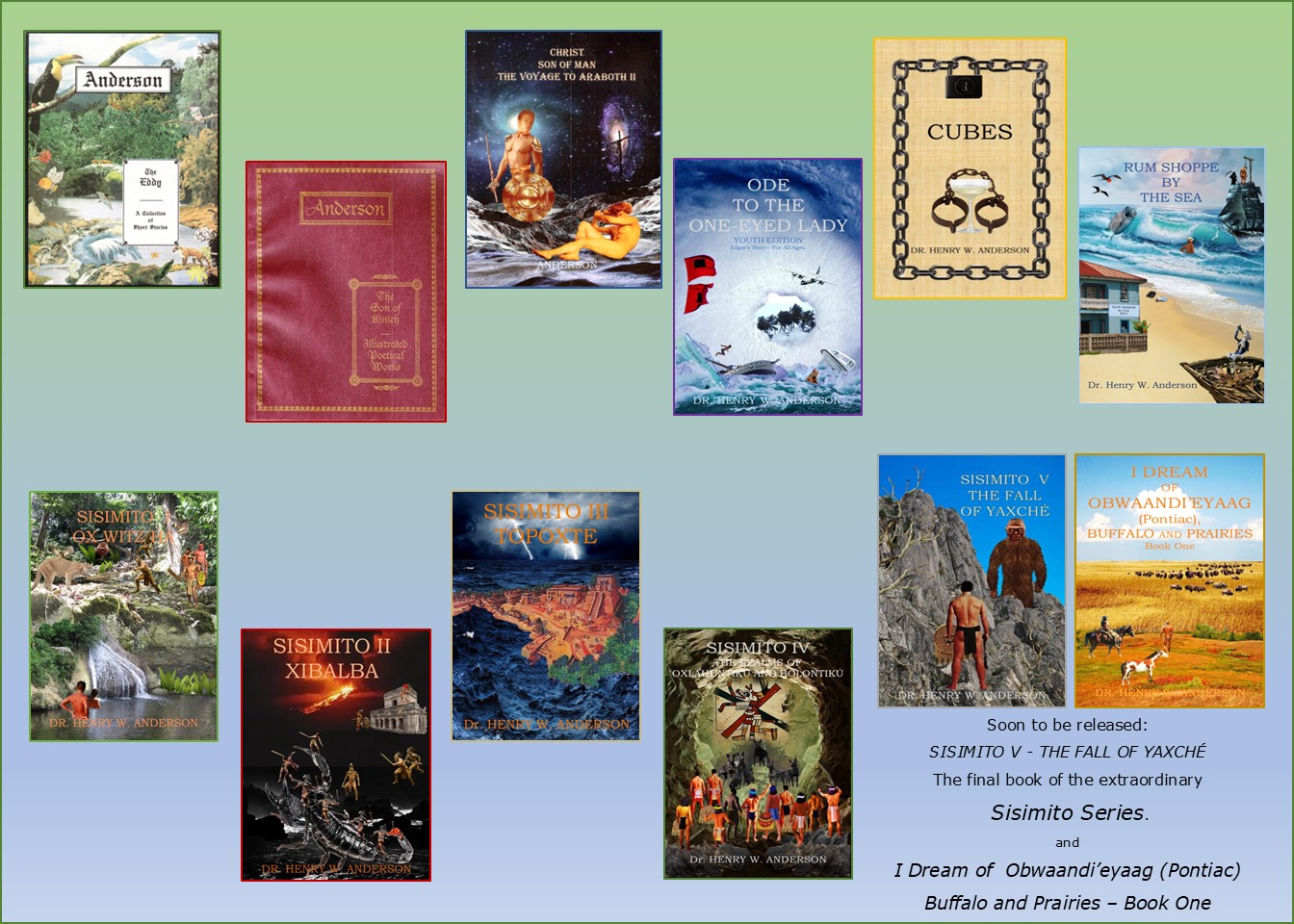 Are you looking for novels, short stories, poems, you will find nowhere else, a book like CUBES that explores USA Society, books that will take you from the depths of space to the eye of a hurricane? Or, perhaps, you would like to sail with the sea captains of Belize as they face violent storms, ghost ships, and specters on lonely islands. The great SisimitoSeries invites you to live an unforgettable adventure within the pristine jungles of Belize, the dangerous world of Sisimito and the Jungle folk, the magnificent city of Ox Witz Ha and the Maya Civilization. Soon to be published is Dr. Henry W. Anderson’s latest book, I Dream of Obwaandi’eyaag (Pontiac), Buffalo and Prairies, which brings to you the mythology, battles, and struggles of the Indigenous Nations of North America in an outstanding adventure. Dr. Henry W. Anderson’s books are available as E-books and Print-on-Demand at store.bookbaby.com (BookBaby Bookshop), recommended, and other worldwide retailers: For store.bookbaby.com, go to: https://store.bookbaby.com/profile/jabirubooksbelizecom Please visit our website at http://jabirubooksbelize.com Add these great books to your personal library for you reading pleasure in 2025. Soon to be published: SISIMITO V - THE FALL OF YAXCHÉ; The final book of the extraordinary Sisimito Series. I DREAM OF OBWAANDI’EYAAG (PONTIAC), BUFFALO AND PRAIRIES. BOOK ONE. INFORMATION/LINKS The works by Dr. Henry W. Anderson are available at the libraries of the Belize National Library Service and Information System. For more information, please go to: https://www.bnlsis.org/ Once on the website, you may go to ‘Public Library Catalogue’ then to ‘Subject;’ select ‘Author’ and put in Henry Anderson; or use the link below to go directly to Dr. Anderson books: https://bnlsis.mlasolutions.com/m5/catalog/(S(tsaodaxofc2mvp3zhpl4wwt2))/Default.aspx?internal=1&installation=LeoBradley Dr. Henry W. Anderson books are also available as E-books and Print-on-Demand at store.bookbaby.com (BookBaby Bookshop), recommended, and other worldwide retailers: Other E-Book Retailers: Amazon, Barnes & Noble, Apple Books, Vearsa, Kobo, OverDrive, Copia, Gardners Books, Baker & Taylor, eSentral, Scribd, Ciando, hoopla, Playster, and many more. Other Print-on-Demand Retailers: Amazon, Barnes & Noble, Powell’s and thousands of other stores and wholesale bookstore catalogs like Ingram and Baker & Taylor, around the world. For store.bookbaby.com, go to: https://store.bookbaby.com/profile/jabirubooksbelizecom Visit us at: https://www.facebook.com/JabiruBooksBelize Visit our website at http://jabirubooksbelize.com 
|