|
The Art of Autism: Turning Difference into Mastery
by Fayemarie Anderson Carter, MA

Mia is the 21-year-old daughter of James “Jim” Patrick Carter and Fayemarie Anderson Carter and granddaughter of Dr. Henry and Stephanie Anderson. She is diagnosed with Autism Spectrum Disorder, Attention Deficit Disorder and Anxiety and was placed in supportive classroom settings since kindergarten. Many professionals with different specialties, in various capacities, have contributed to her education and development of life skills. Most importantly, they sustained relationships crucial to her positive self-image and identity. She is highly intelligent displaying a voracious appetite for learning about science, politics and social issues. Her creativity incorporates using the latest technology with her innate appreciation and love for nature to bring about unique and very intricately designed pieces. She is careful to credit those who enhance her knowledge and broadens her perspective. Sometimes her concern for the human condition can be overwhelming to her, causing distress; however, her love for her fellow human beings evokes great empathy and generosity. She struggles with things common to most of us but she perseveres, her belief in hard work and dedication to finding new ways to meet changing demands key to her continued enthusiasm.

So much mystery envelopes the topic of autism. Some people still believe that it means a person diagnosed with autism possesses lower than average intelligence or that they are unable to feel empathy, speak or interact with others. On the other extreme, people may believe it means a person is very smart in one particular area like mathematics and has the capabilities of a savant. Adding to the lack of clarity has been ongoing distribution of misinformation about the causes of autism. It would seem that debating a cause would not be a priority and that supporting the children and their families would be. In any case, you can imagine how confusing it can be when a family is faced with the news.
I wish I could say that once you have the diagnosis, it is a matter of seeing the right professionals, learning all you can and doing all the things they tell you to do. It is and it isn’t. But first, what is autism? Autism is a neurodevelopmental condition which affects how a person perceives the world, in turn determining how they interact with people and their environment. Autism is lifelong and is on a spectrum. This means that those with this condition are affected in different ways and to different degrees but autism is not something you “catch”. It is not a disease. It is not something you “cure”. It does, however, require treatment and early intervention is optimal in order to give a person with autism the best chance of developing the skills needed to meet the challenges of all that growing up we humans do.
So what are these people like? Well, they are like any of us right? They have gifts and they have limitations. Like some of us, some can let us know what those are and like many of us, they try but we can’t hear or see the way they are letting us know because, wait for it, that is one of our limitations. That’s right. People are always communicating. It is up to us to learn how to understand, but, if we continue to do what we typically do, we won’t. What is that, you may be thinking. Let’s just say, we humans aren’t known for treating people who are different from what we “know” like, well, people. The following lists some of the more similarly experienced limitations and strengths among the autistic population:
- Communicating with others is marked by difficulty interpreting facial expressions and emotions.
- They may need extra time to process information and may be unable to follow instructions or follow them very exactly.
- Many come across as disinterested in other people, not maintaining eye contact, and can appear to not be listening, engaging in some other activity or not asking follow up questions.
- On the other hand, they can speak extensively about a topic of their interest.
- Some are unable to verbally communicate while others may use very formal language and speech can be unusual in pitch, tone and accent.
As many as 84% of those with autism experience great anxiety. There is often a great need for routine so that any, even slight, disruptions can result in explosive behaviour or shutting down. Transitioning from one activity to another is not easy, and some engage in repetitive behaviours like flapping, spinning or tapping an object in order to combat the anxiety. Another source of anxiety is the over or under sensitivity to external stimuli like sounds, light, food, temperature and even colours. You can see why just existing in “our” world would be such a challenge. Schools, shopping centres, movie theatres and restaurants are filled with magnified stimuli.
Strengths can be enviable. People with autism can learn to read at a very early age. They tend to consume tomes of information as long as it is in an area of high interest for them, maintaining concentration for hours and hours. They can memorize and remember facts for a long time. Who doesn’t remember Rain Man? This movie’s character Raymond Babbit was based on the real life of a man named Kim Peek. While the movie depicted a person with a very atypical ability, savant syndrome, and highlighted autism, (the result of creative license), the real Kim Peek did not have autism. It must be noted that more often than not, savantism occurs in individuals with below average intelligence and is not a mark of autism. As such, this association in the movie must not serve a true characterization of someone with autism.
Other common traits show distinct differences in behaviour from their neurotypical counterparts. They think logically and can find unusual ways to solve problems; pay attention to details, demonstrating heightened perceptual skills; have a dependence on routine, a strong adherence to rules and a keen drive for perfection and order. They learn and think visually maintaining a sense of wonderment and curiosity that is considered childlike by some. No matter how much I could write, it would never suffice and I could never hope to inspire a true understanding of that which is autism. Even this story about one girl with autism can’t convey even this girl’s life with autism. Still, it is a story that can start a conversation, spark curiosity, create awareness and in the end, tell of a human being human.
She had a name before she was born. No path was chosen but many promises were made. A hope to make her all that she could be, burned low and steady, waiting for the oxygen of knowledge and experience to fan the flames of growth and mastery. Her mother studied the books and listened to the experts, but, none of that was to offer any of the answers she didn’t even know she sought. Some many years later, it was the girl who would find the answers herself.
It is not clear what came first, the love of designing and making a fur suit or falling in love with the community of Furries. It does seem that it would have been a natural progression from Mia’s fascination with anthropomorphic characters. Mia has always shown a keen interest in animals. At around 9 months old, she started mimicking the sounds birds make, the pitch so high it would startle those unfamiliar with her unique gift. As soon as she could hold pencils and markers, she would spend hours drawing everything, on everything, including herself. In a bid to redirect her from drawing all over herself, I offered her all the paper and notebooks I had collected for just this. The next day, she had once again drawn all over herself. When I asked her why she hadn’t used the paper, she said, “I’m not Mia. I am ‘Piece of Paper’.” For a while there, she really wouldn’t answer to “Mia”, insisting she was to be called “Piece of Paper” and as you have probably guessed, she continued to draw all over herself.

Of course, her drawings were rudimentary at first, but, there was always an indication that there was “something” there. Even if you couldn’t recognize what those first attempts might have been, her intensity and total commitment convinced you that you were the one who just didn’t get it. When she was in the second grade, her teacher must have seen that same “something” because her art was chosen to be displayed in the local library. Eventually, her depictions of dinosaurs and robots gave way to an amalgamation. These hybrid creatures stood tall like the cartoon robots we know, softened by a squishy tail or big floppy ears, their expressions familiar to ourselves. She took inspiration from some of her favourite animals: mice, cats, dinosaurs and birds, especially the eagle. They often held swords and other weaponry engaged in a battle of good vs evil.
For the most part, Mia is a self-taught artist, preferring to learn by trial and error. She puts a lot of time looking at the work of other artists and researching the best tools she should use to get certain effects. It was the same when she decided to learn how to sew. She convinced me to sign up for a class at Michael’s and the day of the class, we almost canceled because I wasn’t feeling well. Lucky for her, her dad offered to go and after that one class, she went all in. She bought a basic sewing machine but soon enough realized that the things she wanted to do required a much more sophisticated machine. Again, she put the time into the research. She read a lot of forums discussing experiences of other designers and asked questions about recommendations. She went back to Michael’s and the lady there pointed her to a special place with special people: Valley West Sewing in Richfield, Minnesota.
It’s been seven years and they have been some of her strongest supporters. From the first day they met, they talked to her as if they had always known her. They treated her with respect and patiently answered her many questions. They took her seriously and in turn, they earned her loyalty and trust. They saw past all the things that usually set up any possibility of a relationship to fail. What does that mean? People with autism may have a difficult time noticing social cues and deciphering a person’s intention, leading to misunderstandings. People not diagnosed autism tend to make accusations that people with autism are “rude”, “selfish” and “mean”. Because of a high number of negative interactions with those not diagnosed with autism, people with autism can develop a heightened sense of rejection, sometimes so debilitating as to meet the criteria for a diagnosis of Rejection Sensitivity Dysphoria (RSD).
RSD is not yet an official diagnosis because of scant research. However, it has been often and long observed in people who are neurodivergent (people whose brains work differently from the established standard). Clinicians describe persons affected by RSD as having a biological pre-disposition due to neurodivergence, coupled with prior experience of rejection, leading to the development pf a high sensitivity to the possibility of rejection. This is a protective mechanism that too often becomes maladaptive. The person is overly anxious so readily does not perceive information or perceives information incorrectly, evoking high reactivity such as crying, yelling even hitting. You can see how this would make for the self-perpetuating cycle. Unable to handle the emotional pain, the person with RSD withdraws socially, failing to maintain long-lasting and meaningful relationships.
Mia, at 14, had closed off her circle to a very tight few people with whom she often argued and engaged negatively. She no longer functioned in the typical classroom, was not friends with any of her peers and regularly faced consequences for undesirable behaviour in her highly specialized education setting. There were so many incidences requiring parental intervention that I, her mother, who worked as a therapist in a highly structured, high risk, intense therapeutic setting, had to resign in order to effectively manage the demand. With this context in mind, you can see how surprising it was that Mia quickly bonded with the staff, having little difficulty calling them on the phone to ask for advice or to make appointments, even asking me to drive by spontaneously so she could say hello or show them her progress.
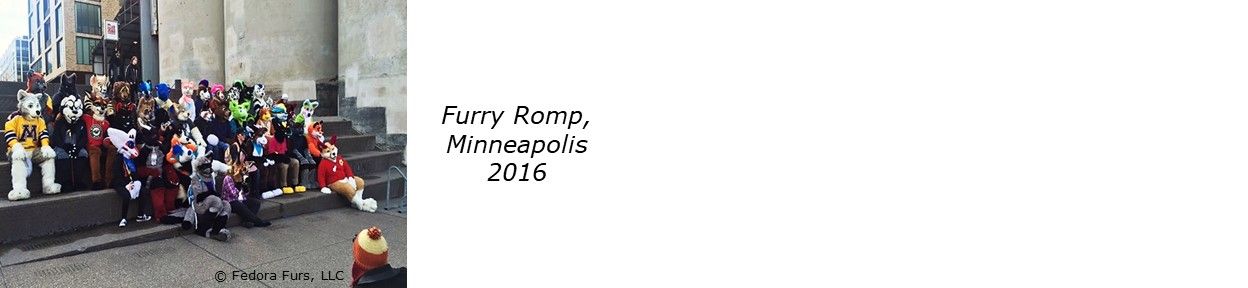
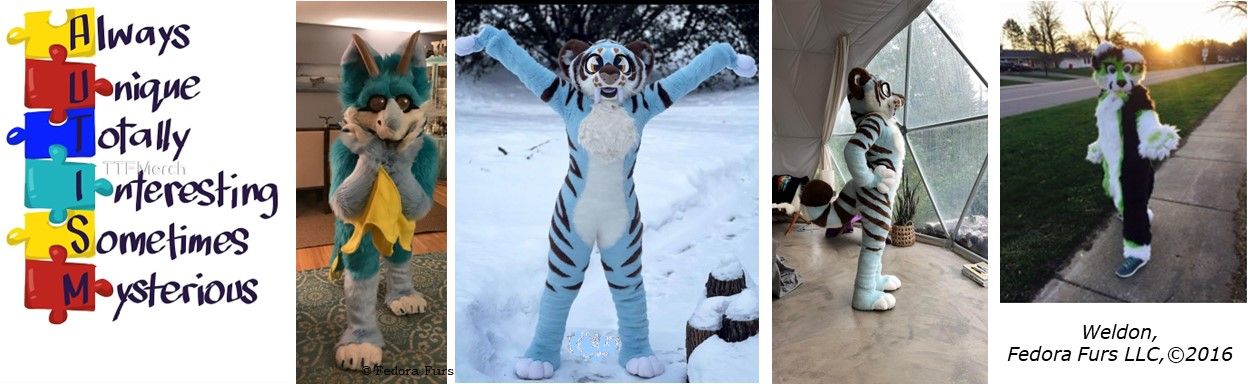
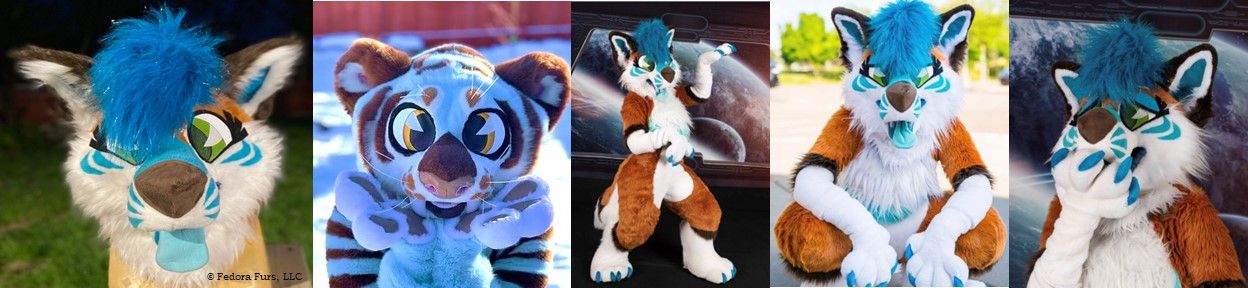
They took her under their wing, the staff sharing their knowledge and expertise on all things sewing machine operation/maintenance. She purchased her first serious piece of equipment faithfully following the servicing requirements like oiling the moving parts and carefully opening up the machine to brush dust and lint. Quickly, she realized she needed a more robust machine to handle the fur fabric. She looked toward her trusted friends for advice. The new machine was quite an investment and her new friends insisted that she learn how to operate it before they sell it to her, thereby, once again reinforcing her trust in the authority and intentions. Mia is a cautious person when it comes to spending money and has spent a lot of time studying capitalism and the pitfalls of consumerism. She takes the same approach to her own customer base preferring that they make considered informed choices over making herself a sale due to pressure tactics. After attending a few Furry events in the spring of 2016, Mia debuted her first work, a full fursuit, Weldon. I am still amazed at how appropriate this name is because it brings to mind a congratulatory “Well done!”. She dragged us to pool parties and picnics and “romps” which are basically walkabouts in public spaces with other furries. Fellow furries marveled at her work, expressing interest in purchasing pieces should she decide to make fursuits commercially. One furry in particular was very enthusiastic, acting as her own personal PR guy, introducing her to everyone and raving about how impressive her talent is. Blue Bell became a fast friend, and soon after would be one of her first commissions for a full fur suit. With our help, Mia became the proud owner of Fedora Furs, LLC.
It would be fabulous if I could say that everything fell into place and that she has a thriving multi-million-dollar enterprise now, eight years later. On the other hand, I know that things work out the way they need to sometimes. Mia was meticulous in setting up her business. She researched best practice and tried to be as thorough as possible devising the type of business her clients could trust in and depend on. Her contracts read like that of a seasoned lawyer’s. Her communication with clients was prompt and exhaustive, causing her a lot of worry as she agonized over every possible interpretation of every discussion. She wanted her clients to have control over their designs and as much input as they needed to have in order that they felt confident in her abilities. She fretted over every detail, measuring again and again. She would devise new techniques as she went along, ripping almost finished pieces and starting all over, trying to make sure her clients received the best quality.
This went on for over a year till finally, it became too much. Mia had too much work, spent too much time chasing perfection and found herself completely out of balance. She had met with a series of compounding circumstances and it culminated with serious burnout. As careful as she had tried to be, her inexperience and over-abundance of attention to creating the perfect product led to missed deadlines and an overwhelming sense of failure. We had to step in and make a hard decision. We decided that we would shut down operations and return all the down payments hoping that the gesture would help retain some goodwill. Most clients, while disappointed, accepted the returns without any confrontation. One person who did not take it well was her friend, Blue Bell, and it weighed heavily on her when they parted ways. Filled with concern and a good measure of fear, we set about supporting this 15-year-old entrepreneur get through a very tough time of self-recrimination, confusion and despair.
Her self-image was damaged, her confidence broken. It was not smooth, nor steady. It took years of hard dedicated work to get Mia to a place where she could accept what had happened and to start to give herself some grace. Slowly she started experimenting with small pieces. Slowly she began opening the many totes of fur fabric, half completed pieces and boxes of tools. Her friend and long-time champion came back into her life after going through his own journey. Together, they set up her office and organized her supplies. She made pieces just for herself, then tentatively, she took on her first commission in almost six years.
Mia hasn’t incorporated yet but plans to in the near future. She is wary of going too fast, too soon and is determined not to repeat the past. There was a time she thought she would never do this again and there were moments she explored getting a “regular” job, pushed in that direction by well-meaning case managers, therapists and her teachers. I didn’t overtly discourage this but I knew it wasn’t an answer to the question parents have to face with all children, a question that takes on a different level of trepidation for parents of children with neurodivergence: Can my children support themselves and become independent citizens? Mia has been afforded the time to figure this out and develop her skills in order to become an independent adult in a way not prescribed by our culture. She hasn’t attended college. She doesn’t work an entry level job. She lives with her parents and spends her time developing her craft. She is cultivating relationships, challenging herself to become more socially interactive. She is seeking ways of holding herself accountable, managing her time so that she can practice healthy work/home balance while effectively coping with her drive for perfection. We can’t wait to see what she does next!
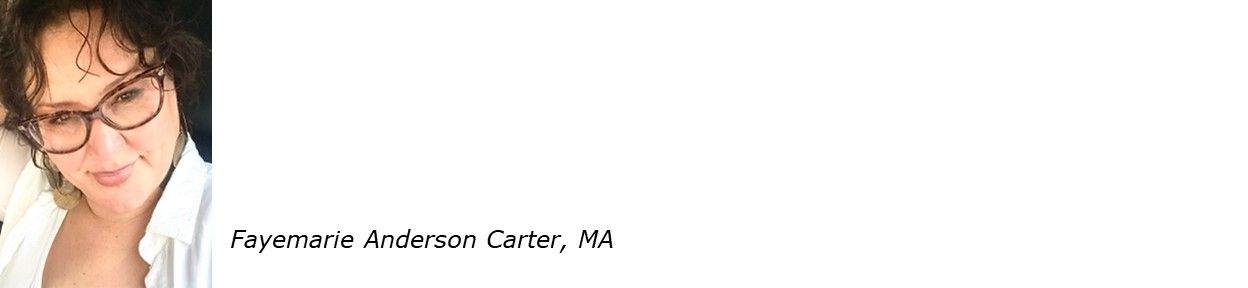
Fayemarie Anderson Carter, MA is the mother of the featured artist, Mia Angelina Carter, and has a Master’s Degree in Counseling Psychology with a focus in Marriage and Family Therapy. She has worked as a Children’s Mental Health Case Manager, as an in-class therapist with middle school aged children, and as a therapist with high school aged teens in a day treatment center. Currently, she serves on the alumni board of her graduate school developing projects which assist practicing therapists with continuing education opportunities and creating stronger ties within the community.
To learn more about artists with autism, click on these links:
https://themighty.com/topic/autism-spectrum-disorder/artists-autism-spectrum/
https://artistswithautism.com/
https://www.appliedbehavioranalysisedu.org/5-acclaimed-visual-artists-with-autism/
https://metro.co.uk/2018/04/21/these-10-artists-prove-autism-is-no-barrier-to-creativity-7446895/
Bibliography
Andersen, R. (2021). Rejection Sensitive Dysphoria and Autism: Is There a Link? Autism Parenting Magazine. https://www.autismparentingmagazine.com/autism-dysphoria-link/
Aruma (formerly House with No Steps and The Tipping Foundation). (2022, February 21). Get to know the real Rain Man: Kim Peek | Aruma. Aruma Disability Services. https://www.aruma.com.au/about-us/blog/get-to-know-the-real-rain-man-kim-peek/#:~:text=In%20psychological%20testing%2C%20Kim%20scored,rare%20condition%20called%20FG%20syndrome.
Autism, A. (2018, September 17). Strengths and abilities in autism. Altogether Autism. https://www.altogetherautism.org.nz/strengths-and-abilities-in-autism/
Autism Tasmania. (2022, August 24). Common Challenges - Autism Tasmania. https://www.autismtas.org.au/about-autism/common-challenges/
Berenson, K. R., Gyurak, A., Ayduk, O., Downey, G., Garner, M., Mogg, K., Bradley, B. P., & Pine, D. S. (2009). Rejection sensitivity and disruption of attention by social threat cues. Journal of Research in Personality, 43(6), 1064–1072. https://doi.org/10.1016/j.jrp.2009.07.007
Challenging Behaviors. (n.d.). Kennedy Krieger Institute. https://www.kennedykrieger.org/stories/interactive-autism-network-ian/challenging-behaviors
Clutterbuck, R. A., Shah, P., Leung, H. S., Callan, M. J., Gjersoe, N., & Livingston, L. A. (2022a). Anthropomorphic tendencies in autism: A conceptual replication and extension of White and Remington (2019) and preliminary development of a novel anthropomorphism measure. Autism, 26(4), 940–950. https://doi.org/10.1177/13623613211039387
Clutterbuck, R. A., Shah, P., Leung, H. S., Callan, M. J., Gjersoe, N., & Livingston, L. A. (2022b, May 1). Anthropomorphic tendencies in autism: A conceptual replication and extension of White and Remington (2019) and preliminary development of a novel anthropomorphism measure. Autism; SAGE Publishing. https://doi.org/10.1177/13623613211039387
Cnc, A. R. (2023). What Is Neurodivergence and What Does It Mean to Be Neurodivergent? Verywell Mind. https://www.verywellmind.com/what-is-neurodivergence-and-what-does-it-mean-to-be-neurodivergent-5196627
Rejection Sensitive Dysphoria (RSD): Symptoms & Treatment. (n.d.). Cleveland Clinic. https://my.clevelandclinic.org/health/diseases/24099-rejection-sensitive-dysphoria-rsd

The works by Dr. Henry W. Anderson are available as E-books and Print-on-Demand at store.bookbaby.com (BookBaby Bookshop), recommended, and other worldwide retailers. Go to:
https://store.bookbaby.com/profile/jabirubooksbelizecom
Please note that our Newsletters are also published on our FaceBook page at
https://www.facebook.com/JabiruBooksBelize
Visit our website at
http://jabirubooksbelize.com

|