|
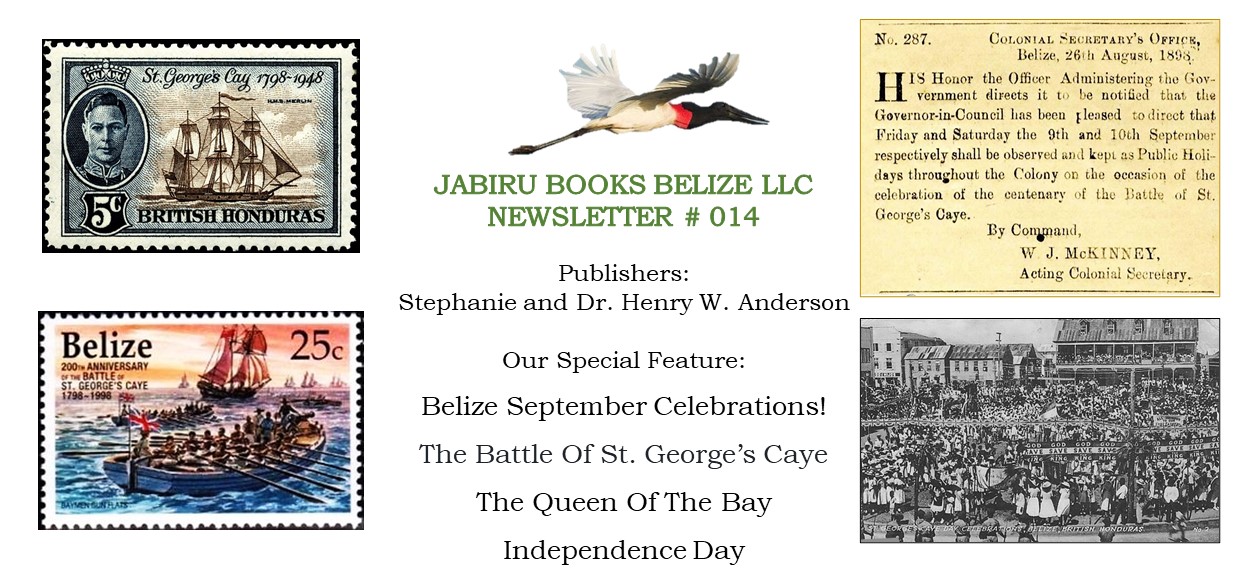
The Battle of St. George’s Caye! 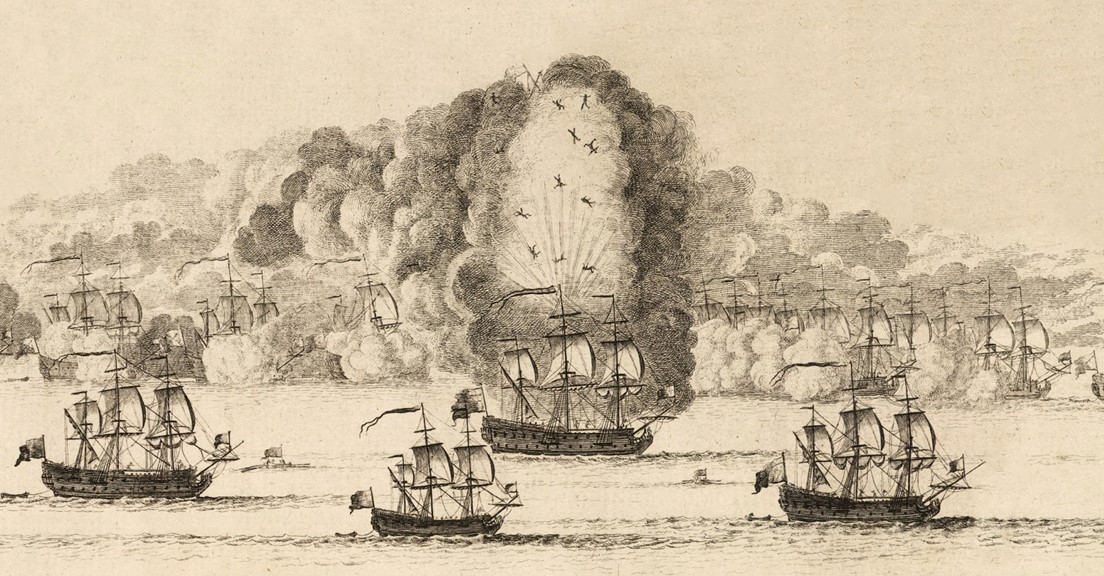
The Battle of St. George’s Caye was a short military engagement that lasted from September 3 to 10, 1798, fought off the coast of what is now Belize. However, the name is typically reserved for the final battle that occurred on September 10. The battle took place between an invading force from Mexico, trying to reclaim Belize for Spain, and a small force of loggers from the residents called the Baymen (nickname for the English and Scottish pirates who traveled up and down the Miskito coast and traded in Central America), who fought for their livelihoods assisted by black slaves. After the final two-and-a-half-hour battle the Spanish withdrew and the British declared themselves the winner. 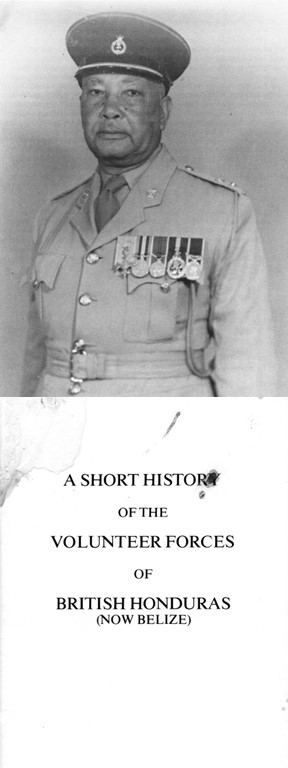
Lt. Col. D.N.A. Fairweather’s book, A Short History Of The Volunteer Forces Of British Honduras (Now Belize), covers the period 1502 to the early 1950s. He writes in the Preface, “The full story of volunteering in British Honduras can never be told. There are no complete records which include the telling of dramatic incidences and little points of reminiscences of which there must have been a great many. These are locked away in the memory of our sires.” He continues, “The Volunteer Force is composed entirely of patriotic members of the community who combine soldiering with their civilian jobs giving up their spare time day after day, week after week, and year after year to be well grounded in the element of soldiering, and to fit themselves to defend their country should the necessity to do so arise. This often means inconvenience and, in some cases, hardship but they cheerfully carry on.” There are several sections in Colonel Fairweather’s book with respect to St. Georges Caye. Some excerpts are: (1) First Attack on St. George’s Caye: “Early in 1779 the population of the settlement increased to over 1500. On the 15th September that year the Spaniards under the Commandante of Bacalar attacked St. Geroge’s Caye taking the inhabitants by complete surprise. Not only were they robbed of their property and effects but their houses were destroyed and their person seized and treated in the most ignominious manner . . .” (2) Newtown Barracks: “On the morning of the 4th September the Spanish flotilla were visible from the mast heads at Belize and the lookouts confirmed there were thirty-one sails of all descriptions. The next day seven of their heaviest attempted to force their passage over the shoal by another passage by putting their provisions and stores into a number of launches. But they were again repulsed. On this as well as on the two preceding days the Spaniards expended an immense quantity of ammunition to no manner of purpose while the Baymen fired comparatively little but with steadiness and effect. (3) The Battle of St. George’s Caye: “The baymen’s fleet was drawn up between the Merlin in the centre directly abreast thye channel. The sloops with heavy guns and gunboats n her easter and western flanks. At about 1:30 p.m. the Spaniards, to use Captain Moss; words, ‘came down in a handsome manner and with good countenance, in a line abreast, using both sails and oars, and commenced the engagement with a very brisk and heavy cannonade. About half after two o’clock Captain Moss made a signal to engage which was obeyed with a cool and determined firmness that would have done credit to veterans.” The Merlin discharged several broadsides while the sloops and schooners were very active and kept up a constant and well directed fire. The action continued for two and a half hours when four of the enemy vessels ran aground. This led to some confusion and their fire slackened. On seeing this, the slaves, who manned the floats gave a hearty cheer and in the midst of a firing grape kept upon them from the Spanish ships covering those which were aground, in an undaunted manner roved their boats and used every exertion to board the enemy. But Captain Moss, from motives of prudence sent a boat to call them back.” These excerpts in no way does justice to the accounts of the Battle of St. Georges Caye as written in Colonel Fairweather’s book. His book should be read by all Belizeans, historians, and especially by members of our National Security Forces. 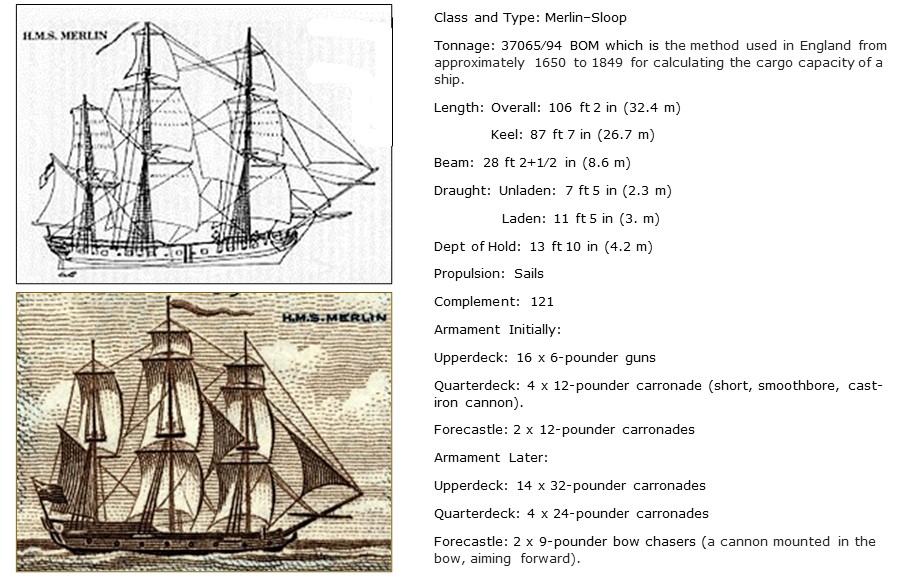
HMS Merlin was one of the two original Merlin-class sloops that served the Royal navy during the French Revolutionary Wars. She was launched in 1796 and was broken up in 1803. Her greatest accomplishment was her role as the leading vessel in a motley flotilla of local vessels that defeated a Spanish attack on the British colonists in Honduras at the Battle of St. George’s caye. She later captured a number of small merchant vessels in the West Indies before returning to Britain, where she was broken up. 
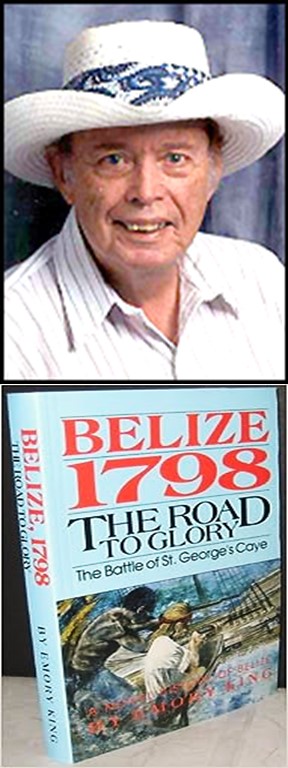
Emory King (February 22, 1931 – August 14, 2007) was a self- proclaimed Belizean historian, author, and journalist. He served the nation of Belize in a number of capacities, including as National Film Commissioner. In 1953, at the age of 22, King and a group of friends sailed south from the United States on a yacht and were shipwrecked off the coast of Belize due to the Barrier Reef. After recovering, King elected to stay. King found work with the ruling People’s United Party becoming especially close to leader George Cadle Price and becoming a columnist/editor for The Belize Times in the 1970s. Also, at that time King was named Film Commissioner; he was responsible for bringing several documentaries and films to Belize, working with both the predecessors of Belize's two television stations: Great Belize Television and Tropical Vision Limited. King also had bit parts in several movies produced in Belize. King wrote several books, both historical and personal. Among them are Emory King's Drivers' Guide to Belize, The Great Story of Belize Series, Belize 1798, the Road to Glory: The Battle of St. George's Caye, and others. King was criticized for holding controversial historical views, particularly over the Battle of St. Georges Caye where he clashed with Belizean Evan X Hyde. He once headed the Belize Historical Society. King married his wife Elisa and had several children and grandchildren. He died at his home in Tropical Park on the Western Highway, now George Price Highway, east of Hattieville.
Click on the link below and enjoy Calypso Rose and the Lord Rhaburn’s Combo version of the Patriotic Song, The Tenth Day Of September, the words and music by Rev. B. F. Abeling S.J. https://www.youtube.com/watch?v=eZ81urxxX1g Enjoy Tribute to the Baymen by Jesus ‘Chuchin’ Acosta; played below by The Harmonettes and sung by Allan Andrewin: https://www.youtube.com/watch?v=S07RleqpAgg A September Morn Long Ago (Written with much ‘poetic license.’) (Standard English Version) By Dr. Henry W. Anderson The sun had laboured and come up, That long ago September morn, With passing clouds it still was hot, Each Bayman slumbered on his cot; The flies were circling round and round, And sweat was dropping on the ground. A little drizzle touched the roof, An ugly cloud passed far aloof. It was about mid-morning time, In this hot of hottest clime, All the Baymen did was nap, Upon His Royal Highness cot. The Magistrate was terribly worried, So he and the Sergeant rather hurried, Stretched their legs towards the sea, A ship or two they looked to see. But not a speck till blue met blue, Just clouds and surf if sight held true. St. George’s Caye! St. George’s Caye! Home of the Baymen, you and me, From this land we’ll never flee; St. George’s Caye! St. George’s Caye! Many times have the Spaniards come, Many times have they had to run. So while the Bayman on the King’s cot, He keeps his musket piping hot, As muskets not for all around, Some sit with sticks upon the ground, Sticks from the Pork and Dough Boy tree, Prickled and sharpened weapons they be. Brought from the mainland to the caye, Brought in dories across the sea, Such prickles, long and straight and strong, Across the backs of those who wrong, Surely, did the Spaniard know of this St. George's Caye he’d definitely miss. As I had mentioned to you before, The Magistrate and the Sergeant on the shore, Did search and search to see some form, That drizzly and darkening September morn, Then suddenly with step astride, The glass was swiftly swung aside. “A ship! A ship! 1 see a ship! It comes to us at a very fast clip, Is it ours? Is it not? Oh, my goodness, this is hot;” The Magistrate did then spy, To see the ship come bye and bye. No flag could he discern at first, His throat was dry, a sudden thirst, Then in a hurry, things got hot, Cooks forgot their fire and pot, The church bell rang and the cannon rolled, The Baymen from their homes did pour. And marching bravely up and down, Their muskets fired out a round, And held up high the Baymen’s sticks, Nothing sharper than those pricks. Boom! Boom! Boom! Did the Baymen hear, And cannon balls were in the air. The ship afar out at sea, Was a decoy, between you and me, For suddenly from round a mangrove patch, Some Spaniard ships sailed for their catch, And never in our history before Was Spaniard ships so close my shore. Spaniard warships numerous at hand, Only Baymen dories to protect our land, The Spaniards knew of our mahogany stock, But they hadn’t charted our coral rock, They came like rats fleeing out a hole, But in the daylight were like moles. Booming booms from left to right, The Spaniards rallied for the fight. But God for us that September day, A swift breeze rose upon the Bay, Some said it was a hurricane, But I don’t know. Here and there and everywhere, Cannon and coconuts filled the air, The Pork-And-Dough-Boys fought the attack, As the wind hurled the ships upon jagged rocks, Made them writhe in the stormy seas, The enemy sunk in the wind and waves. Amidst the Spaniards confusion spread, And musket lead soon dropped them dead, But the Baymen did not put all in Hell, For some had to go back, the story to tell, And as the prickles they took from their backs, They swore that to Belize they’d never come back. And so, my friends, as I end this tale Of that September morn, the battle and the gale, I hope you’ll remember the Baymen’s fight, To be in our history, forever a right, For they were the ones who saved this land, Given to us by God’s Own Hand. From The Son Of Kinich - Illustrated Poetical Works. Published 1995 by Jabiru Books. The Queen Of The Bay! 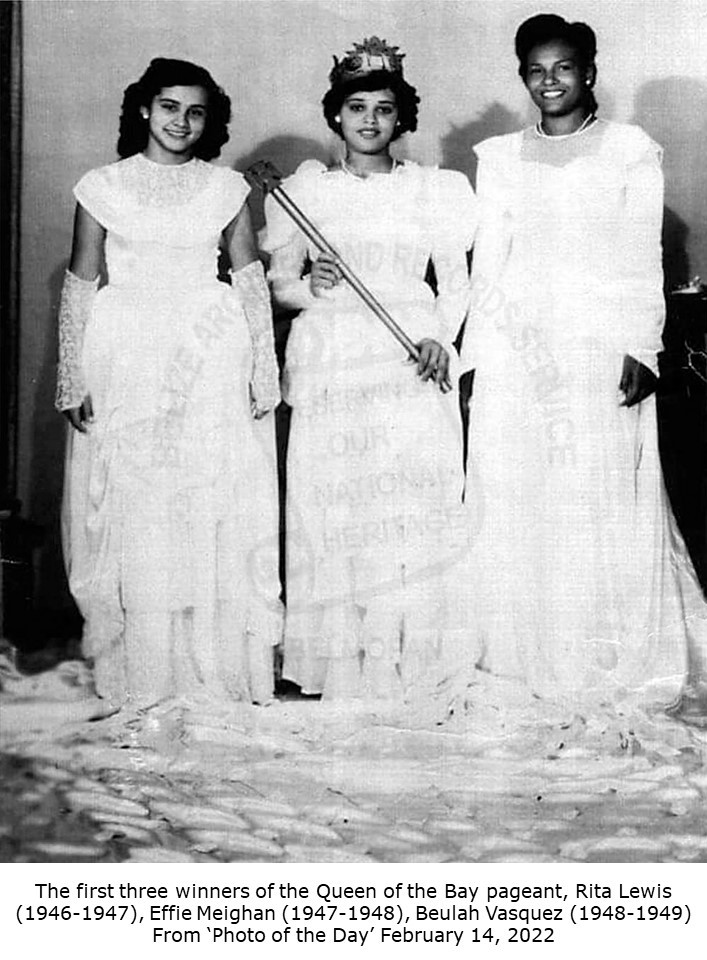
The Queen of the Bay was first held in 1946 and was organized by a retired civil servant by the name of Monrad Metzgen who was a member of the Loyal and Patriotic Order of the Baymen (L&POB). The contestants were young ladies who represented different Houses such as World War II veterans Dick Fairweather and Cassian Waight, Simon Lamb, Thomas Paslow (St. George’s Caye) and others. The first Queen of the Bay to be crowned was Rita Lewis. Mr. Roderick Augustus “Father” Pitts, a civil servant and a member of the L&POB, made his contribution by writing the famous Proclamation, “O Yea, O Yea”, that is read at the ceremonial crowning of the Queen of the Bay. (From an article by Conrad Edison Staine) The Queen of the Bay Contest continues until this day. Listen to the Queen of the Bay song. You may even want to do a few curtseys. Music and Words by Eloise Humes. https://www.youtube.com/watch?v=WLUQNsdfQww RUN FU QUEEN Kriol-Inglish Version By Dr. Henry W. Anderson Lawd da whe a gawn run fu queen fa? Mi house inna wa uproar. Mi pa he di halla. A no know whe fu du. Everybody di shout. Everybody di se dey know just whe dis ting bout. Mi Ma no know nomo how fi cook. She di de di try awn stockings pan she foot And so ole high heels fra way back a di bed, Roach and spida in de, Charlie Price, lang time dead. But dat neva bad till she open di trunk; Some style whe de in de far betta dan punk. Oh Lawd mi god a gato hide mi face. A hope none a mi friend dem com da dis place, Fu if dey si mi ma dress up like dis A wafall down dead. Oh Lawd, all's amiss. Di dress whe ma put awn no gat time fu reach ground Fu she put awn five cryndolins whe go round and around. And she buss line whe used to full up wan time, Now mi po ma inna de area no langa shine. And den she put awn wa hat wit latta feda And wen she steps off, dis mus change di wedda. Now she practice fu steps up and down di house Till mi papa staut rail up— no food. How he cuss. But mama no kay, she gwen da Queen show. Oh Lawd a no know if a could put up wit mo. Yes Lawd, da whe a gawn run fu Queen fa? Mi house inna wa uproar. Mi papa he di halla. Mi grampa now di practice fu smoke wa pipe, Di fire engine come fu di house set alight. And all day lang grampa cough and cough. Yes Lawd, and y so difficult no fu laugh. Wus wen he try fu use walking stick, He swing a up and down like wa workman pick. Neva done till he pick mi ma right afa she heels Just wen she mi di steps, she steps right afa keel; And she fall inna di bucket wit di soap and map. A neva know dutty words could come out so fat. Lawd da whe a gawn runfu Queen fa? A neva know y would a change mi life, sah. Mi breda dey di practice fu be page-boys. Yu should si dem di stand up inna Englishman poise. And mi sista dey da now hand-maidens. Dey no clean di house, di zinc full laden. Lawd da whe a gawn runfu Queen fa? If only a mi know da whe mi wa happen ya. But di wus ting did happen to we wan day Wen ova di radio dey sing ‘‘Queen of the Bay." Mi ole granny she hold out frack tail. She figet how she ole. She figet how she frail, She tremble down wa courtsey, gawn down low. Mi po ole granny, dey all bawl outfu mo. So she bend down Iowa and she step up di action. Neva done till she fall down, en up ina traction. Oh Lawd da whe a gawn run fu Queen fa? And suppose a does win, da whe wa happen, sah? From The Son Of Kinich - Illustrated Poetical Works. Published 1995 by Jabiru Books. Belize’s Independence September 21, 1981 Belize was a British Crown Colony since 1862. On September 21, 1981, Belize was declared an independent nation, free from Britain’s ruling. Annually, to celebrate this historic moment, the entire month of September is filled with festivities, activities, and celebrations that show the citizens’ patriotism for the country. Parades, carnivals, concerts, fireworks, shows, and other functions are held countrywide to commemorate this important public and bank holiday. The celebration of September 10th, St. George’s Caye Day or National Day, is also an integral part of the September Celebrations. His Royal Highness Prince Michael of Kent, (Michael George Charles Franklin) is a member of the British Royal Family and he represented Her Majesty Queen Elizabeth II at Belize’s Independence celebrations. He is 52nd in the line of succession to the British Throne as of May 2023. Queen Elizabeth II and Michael were first cousins through their fathers, King George VI and Prince George, Duke of Kent. Michael's mother, Princess Marina of Greece and Denmark, was also a first cousin of the Queen's husband Prince Philip, Duke of Edinburgh, making him both a second cousin and first cousin once removed to King Charles III. 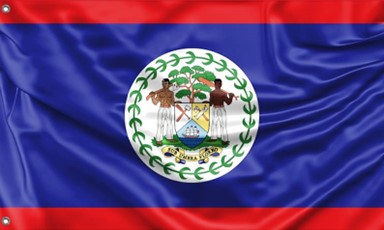
The Flag of Belize comprises a coat of arms on a blue field with red stripes at the top and bottom. The blue field represents the Peoples United Party which led the nation to independence; the red stripes represent the United Democratic Party. British Honduras (Now Belize) obtained a coat of arms on 28 January 1907.The coat of arms recalls the logging industry that first led to British settlement there. The figures, tools, and mahogany trees represent this industry. Of the two men shown in the white disk, one is a mestizo and the other a Kriol. These men hold tools of the trade—an ax and the paddle used to send trees downriver for export. The national motto, Sub Umbra Floreo, meaning "Under the Shade I Flourish", is written in the lower part of the coat of arms. Belize National Anthem featuring the Security Forces (Five years ago). https://www.youtube.com/watch?v=ixT5EFEFLSo
The words of Belize’s National Anthem, Land of the Free, (Originally Land of the Gods) were written by Samuel Alfred Haynes and the music by Selwyn Walford Young in 1963. 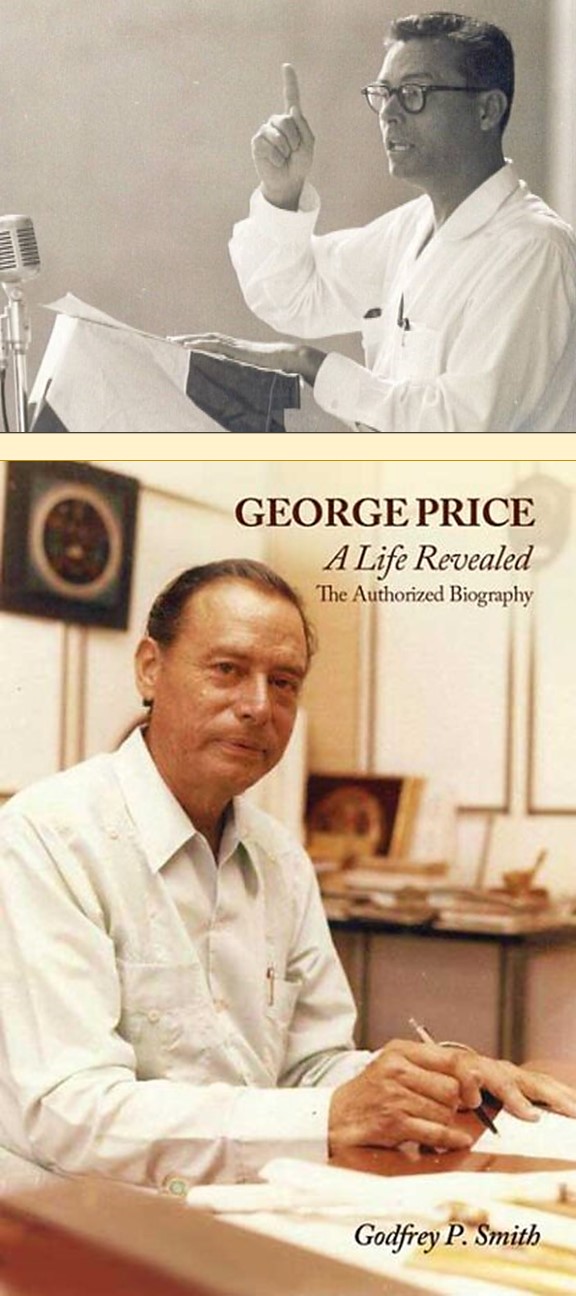
The Right Honourable George Cadle Price, P.C., (15 January 1919 – 19 September 2011) was a Belizean statesman who served as the head of government of Belize from 1961–1984 and 1989–1993. He was First Minister and Premier under British rule until independence in 1981 and was the nation's first prime-minister after independence that year. He is considered one of the principal architects of Belizean Independence. Today he is referred to by many as the “Father of the Nation. Price effectively dominated Belizean politics from the early 1960s until his 1996 retirement from party leadership, having been the nation's head of government under various titles for most of that period. The book George Price, A life Revealed, The Authorized Biography, was written by Godfrey P. Smith, a Belizean jurist, attorney and politician. A member of the People's United Party, Smith is a former member of the Belize House of Representatives. He states in the Preface, “My aim has been to provide an authentic comprehensive and authoritative – but by no means exhaustive – account of the life and times of George Price. It is my hope that it will stimulate further research into the life and events surrounding the man who dominated Belizean politics for 46 years, leading to a deeper understanding and knowledge of the country’s political history.” Jabiru Books Belize LLC highly recommends this well written and very informative book.
MIDNIGHT On Belize’s Independence, September 21st, 1981. By Dr. Henry W. Anderson In ancient books of glories told, Of nations young and young men bold, Of Gods of war, of men of hate, Of crimes of passion and hands of fate; Of times when men must live in hope And carry on their tasks on yoke; And pray that all may not be hell The Fates would stop the circle well, That tasks though hard not put aside But taken firmly in one's stride, That peace be won, no battle fought, And love be all instead of wrath, That man and man grip other's hand That brothers be to work the land, That mothers bear both child and life And man may help his burdened wife, That children live in Freedom's hold And grow to be our soldiers bold, That men who rule may always know That power is on them bestowed But as a joining in the chain — A chain that's made from cries of pain: From men and women tossed on seas And babies born from bended knees In cramped canoes where hopes are dim And prayers are oft for next of kin; On jagged rocks, of shipwrecked men, Of dying soldiers splintered then By cannon roar and powder blast, Of dying flags and broken masts; From men in chains, from horses’ whips, From reddened eyes and welted lips; Pain from arrows sharp and swift Amidst all pain all heads would lift Towards the call for Freedom. Lift high the heads for Freedom. Let dead men walk, past heroes come, For history is made, no more charade. She comes, Freedom comes, at Midnight. From The Son Of Kinich - Illustrated Poetical Works. Published 1995 by Jabiru Books. 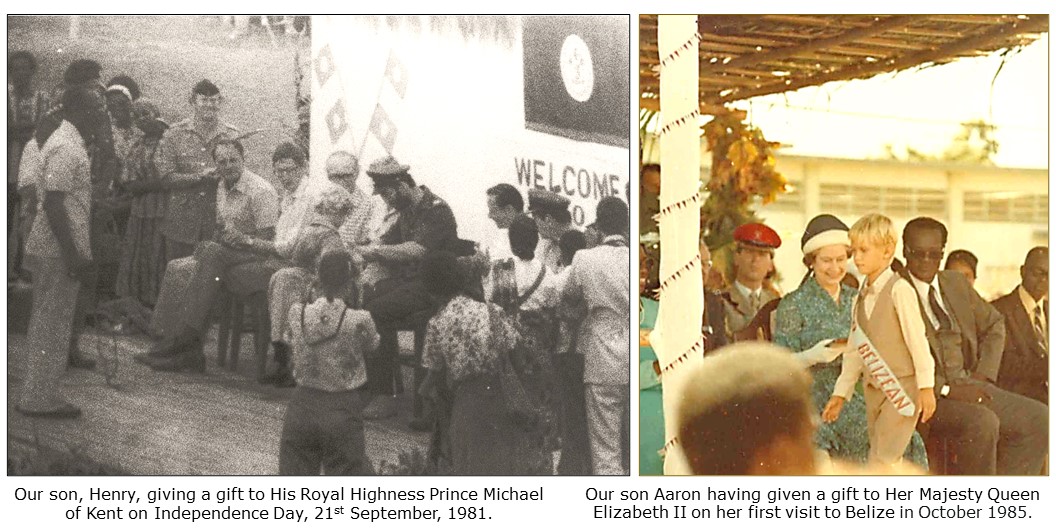
Books already published: 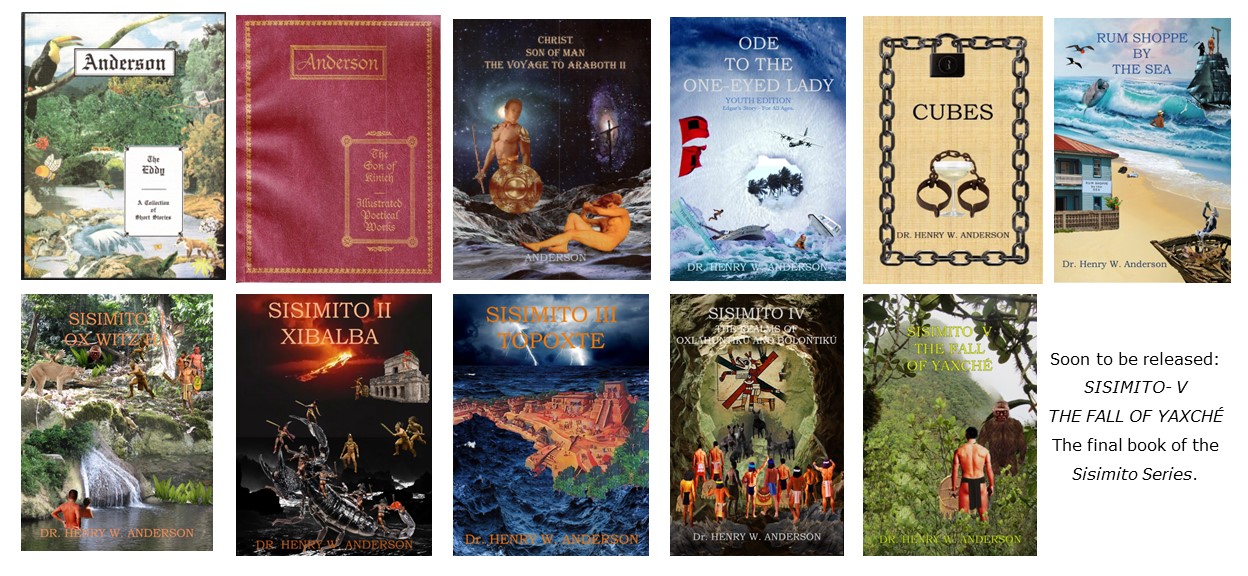
The works by Dr. Henry W. Anderson are available as E-books and Print-on-Demand at store.bookbaby.com (BookBaby Bookshop), recommended, and other worldwide retailers: E-Book Retailers: Amazon, Barnes & Noble, Apple Books, Vearsa, Kobo, OverDrive, Copia, Gardners Books, Baker & Taylor, eSentral, Scribd, Ciando, hoopla, Playster, and many more. Print-on-Demand Retailers: Amazon, Barnes & Noble, Powell’s and thousands of other stores and wholesale bookstore catalogs like Ingram and Baker & Taylor, around the world. For store.bookbaby.com, go to: https://store.bookbaby.com/profile/jabirubooksbelizecom Please note that our Newsletters are also published on our FaceBook page at https://www.facebook.com/JabiruBooksBelize Visit our website at http://jabirubooksbelize.com. If you know anyone who would like to receive our E-mail directly, please ask them to go to our website and forward their E-mail address through ‘Contact Us.’

|