|
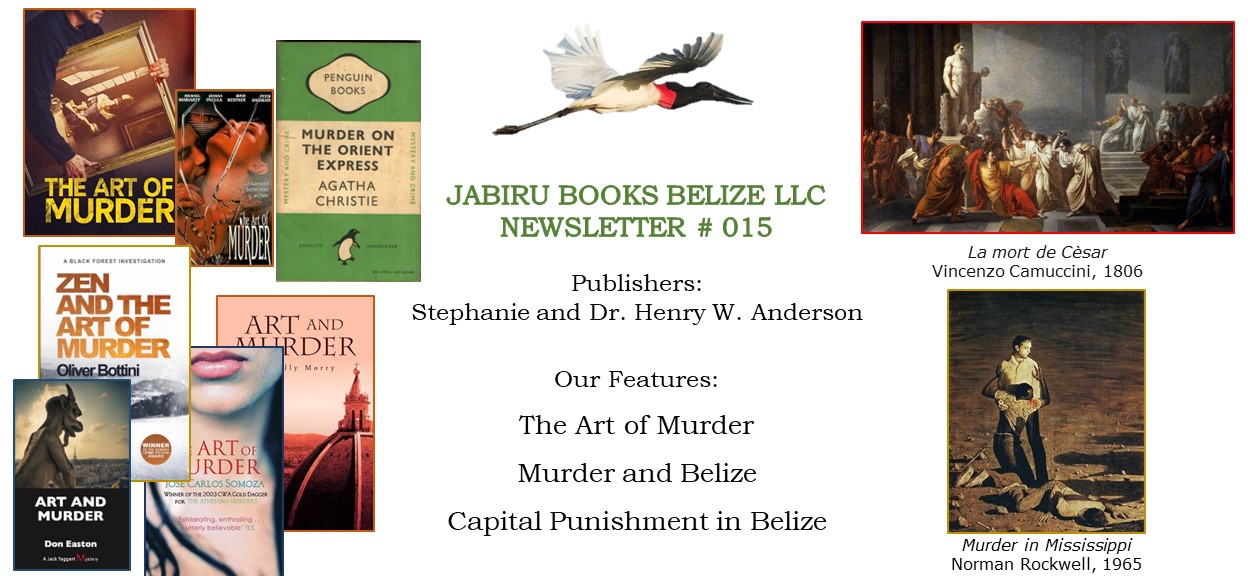
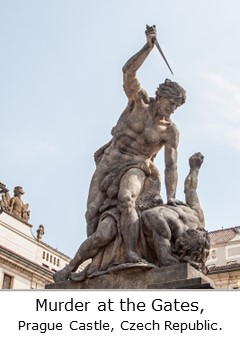
Violence in art refers to depictions of violence in fine art and literature as well as popular culture such as cinema and theater. It has been the subject of considerable controversy and debate for centuries. In Western art, graphic depictions of the Passion of Christ have long been portrayed, as have a wide range of depictions of warfare by later painters and graphic artists. Theater and, in modern times, cinema have often featured battles and violent crimes. Similarly, images and descriptions of violence have historically been significant features in literature. Plato had proposed to ban poets from his Ideal Republic because he feared that their aesthetic ability to construct attractive narratives about immoral behaviour would corrupt young minds. Murder has become so conventional in our world of today that many times we just skip over it when one is reported unless there is something particularly spectacular about it. It is not only Murder itself that is commonplace, however, but its use in paintings, sculptures, books, movies, plays, television, board crime-solving adventure games like Clue and The Art of Murder, and the dangerously increasing number of violent video games that award points for the amount of Murders that are committed. Perhaps, it is time to reflect on Plato’s proposal. 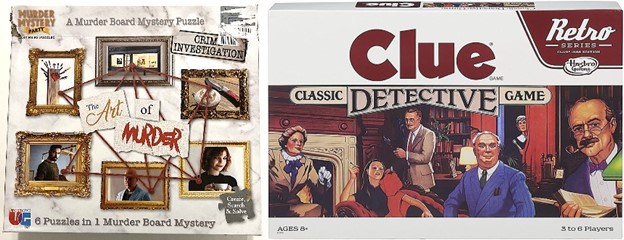 
In 2019, an estimated 475,000 people worldwide were victims of murder. Rates in high-income countries/areas are generally lower than rates in low and middle-income countries/areas. Some 80% of murders occur in males and the highest rates are in males aged 15–29 years. Estimates are not calculated for countries with populations under 90 000 in 2019 or World Health Organization non-Member States. Beyond its direct impact, Death, Murder, have serious negative effects on the lives of surviving family members, particularly children. Psychological effects include anxiety, depression, post-traumatic stress disorder, aggression, guilt and a heightened sense of vulnerability. Socio-occupational effects include problems in school and at work. Murder may also lead families to incur expenses they can ill afford, such as funeral costs and lawyer fees. If the victim was a breadwinner, families may no longer be able to cope financially. Murder can generate a sense of insecurity in society, and when high rates occur in countries with weak, inefficient and corrupt criminal justice systems, can contribute to undermining social and economic development. Murder is caused by mix of factors at the individual, relationship, community and societal levels. Demographic structure is a well-established risk factor for murder. Societies where young people – particularly young males – make up a greater share of the population tend to have higher murder rates. Transitions in political regimes may also be associated with increased murders. The fall of Communism in Eastern Europe, apartheid in South Africa, and dictatorship in Brazil all saw rapid increases in murder rates. Murder rates may increase in the absence of good governance and effective rule of law. Murder rates tend to be lower where states have legitimacy in the eyes of citizens, can deliver key political goods such as justice based on the rule of law, and have low levels of corruption. Poverty, economic inequality, ethnic fractionalization, and the availability of guns and alcohol are also risk factors for murder. With respect to street gangs, many are sophisticated and well organized; all use violence to control neighborhoods and boost their illegal money-making activities, which include robbery, drug and gun trafficking, prostitution and human trafficking, and fraud. Many gang members continue to commit crimes even after being sent to jail. From an article published by the World Health Organization. 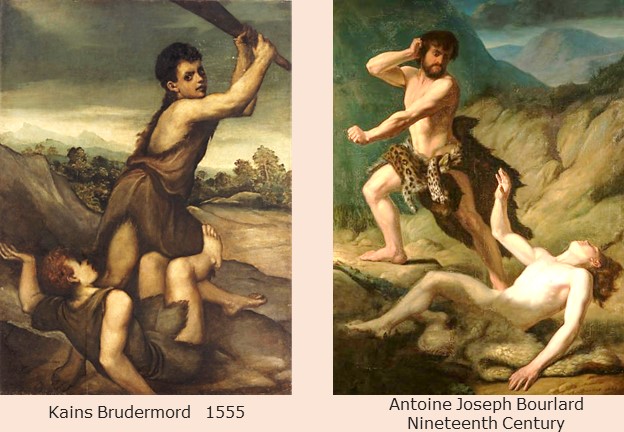
The First Murder According to Jewish tradition, Cain rises up and murders his brother Abel with a stone. Genesis tells us the murder was driven by anger and envy over the Lord finding Abel’s offering more favorable. Cain murdering Abel is one of the most well-known – and unfortunate – stories in the Old Testament. It is believed to be the first murder in history, confirming what most readers of Genesis assume: Things are heading downhill for mankind. Sin will grow and grow in the hearts of Man on Earth until God intercedes. From an article in Know Mercy.
Quote # 1: Dietrich Bonhoeffer, a German Lutheran pastor, theologian and anti-Nazi dissident, said: “When a man gets angry with his brother and swears at him, when he publicly insults or slanders him, he is guilty of murder and forfeits his relation to God. He erects a barrier not only between himself and his brother, but also between himself and God.” Bonhoeffer was known for his staunch resistance to the Nazi dictatorship, including vocal opposition to Adolf Hitler’s euthanasia program and genocidal persecution of the Jews. He was arrested in April 1943 by the Gestapo, imprisoned, and later transferred to a concentration camp. He was accused of being associated with the 20 July plot to assassinate Hitler and was hanged on April 9, 1945 during the collapse of the Nazi regime.
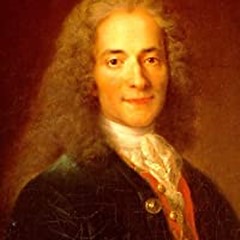
Quote # 2: “It is forbidden to kill; therefore all murderers are punished unless they kill in large numbers and to the sound of trumpets.”―Voltaire François-Marie Arouet, (21 November 1694 – 30 May 1778) was a French Enlightenment writer, philosopher, and historian. Known by his nom de plume M. de Voltaire he was famous for his wit in addition to his criticism of Christianity, especially the Roman Catholic Church, and of slavery. Voltaire was an advocate of freedom of speech, freedom of religion, and separation of church and state. Note: Voltaire’s quote is very relevant in today’s world as is easily seen in Vladimir V. Putin’s brutal invasion of Ukraine and the ‘War Crimes’ and ‘Crimes Against Humanity’ he has committed there.
Murder and Belize When I was growing up in the fifties, a murder was a rare thing in Belize. If there were one a year that was plenty and was usually what is called ‘a crime of passion,’ not that the nomenclature made the murder any less a murder. When a murder did happen, the entire country was overwhelmed by the news. Today, unfortunately, many times it’s only family and friends who are overwhelmed. As stated above, generally, some 80% of murders occur in males and the highest rates are in males aged 15–29 years. It is, indeed, very sad when we see one of our young men lying in the street, his blood, his life, flowing away because of violence. All Belizeans, every Belizean, must be willing to accept that this loss of life is a catastrophic waste and as members of the Belizean Society we all bear responsibility, no matter who we are, and the sadness felt should not be that of only friends and family, but of every Belizean. 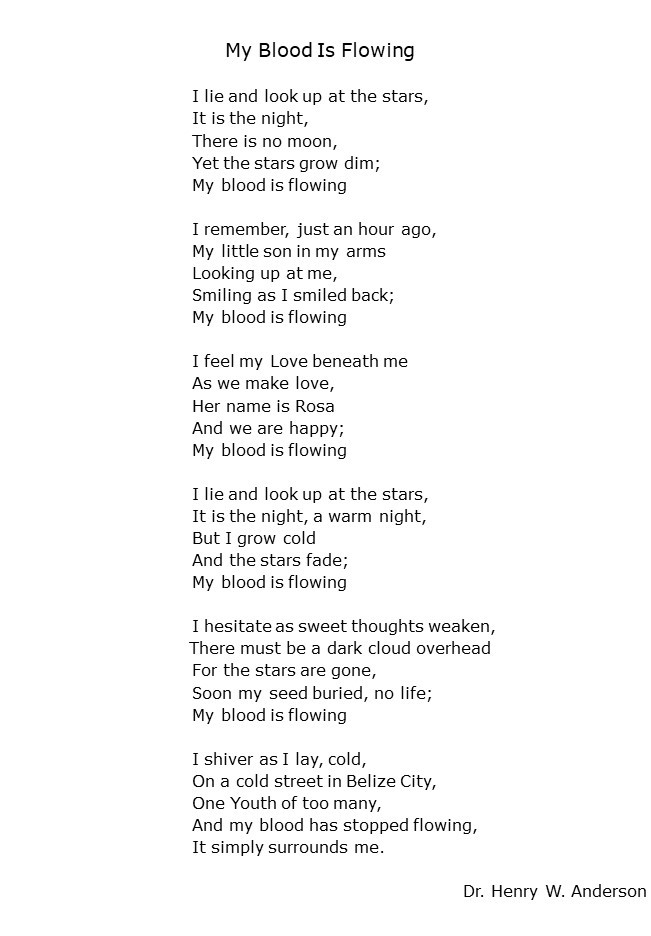
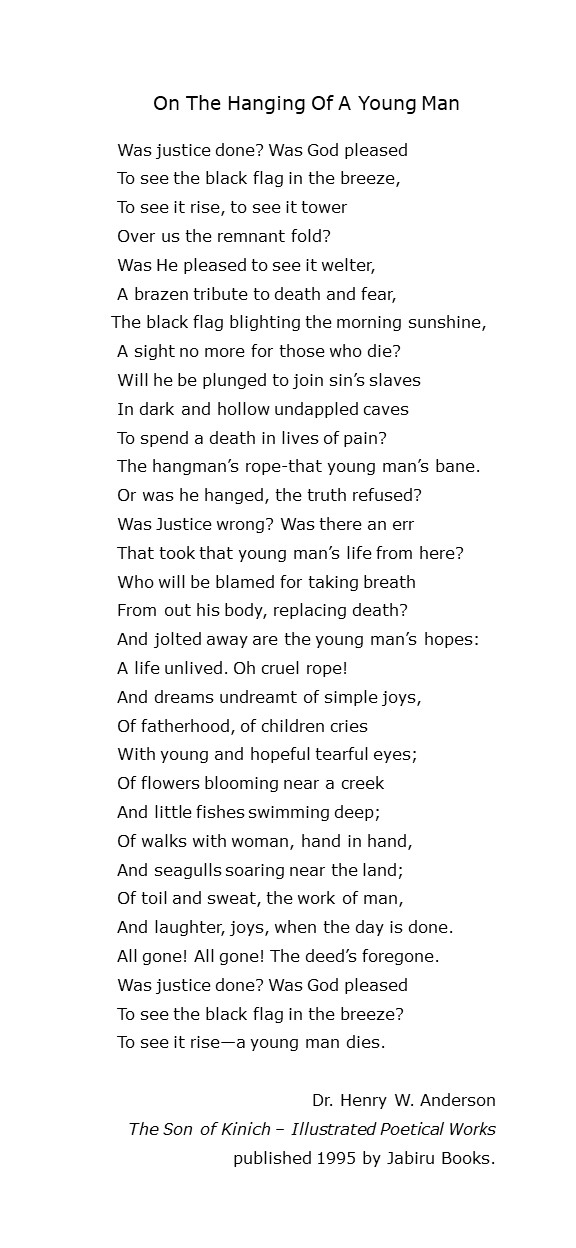
The Author and Publishers allow this poem, My Blood Is Flowing, and On The Hanging Of A Young Man given below, to be used in their entirety for Public Awareness purposes, Anti-Violence promotions, and to bring awareness to the tragedy and loss of many of our young men who are murdered on our streets, who will no longer have the opportunity to fulfill their potentials, enjoy the beautiful moments in life, to make love with their Love, to see their sons and daughters smile, to see their sons and daughters on their first day of school. The poems must not be used for commercial purposes, included in an anthology without permission, and the author and publisher must be acknowledged, at all times. Number of Murder Crimes registered in Belize from 2015 to 2022 Belize has a remarkably high murder rate. The main sources of violence in the country are domestic gangs that operate mainly in Belize City, engaging in local drug trafficking and robberies. However, as the country's role in the international drug trade has grown, Central American gangs and Mexican drug trafficking groups have also established a presence there. Belizean authorities have expressed concern in recent years that the violent Mexican drug gang, the Zetas, could be active along the border with Guatemala, another country where the group has a strong presence. Authorities have also noted that another Mexican criminal organization, the Sinaloa Cartel, has links to Belize. This was seemingly confirmed in August 2012 when the US Treasury Department placed sanctions on three alleged drug traffickers in Belize whom they believed to be “key associates” of the Sinaloa Cartel. Belize is also a transit point for the regional arms trade, with traffickers exploiting weak border controls in the country to move weapons into neighboring Guatemala and Mexico, as well as Honduras. Despite the presence of transnational criminal actors, the majority of violence in Belize is still driven by domestic gangs who engage in local drug trafficking and robberies, and violence is primarily concentrated in Belize City. At least 113 murders were committed in Belize in 2022. Two years earlier, the number of murder crimes reported to the Belizean police amounted to 102, the lowest since, at least, 2015. Belize's penitentiary system has only one correctional facility in the country, the Hattieville Central Prison. It has been stated that the prison does not meet international standards. The Kolbe Foundation, a non-profit, non-governmental organization, has managed the prison since 2002. Data from World Prison Brief, states that at December 31, 2022, the prison population was 1,199, that is 289 per 100,000 of the national population estimated at 415,500. The official capacity of the prison is 2,100, the then occupancy level being 57.1%. 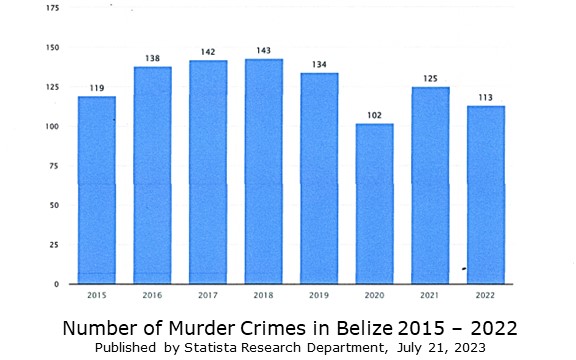
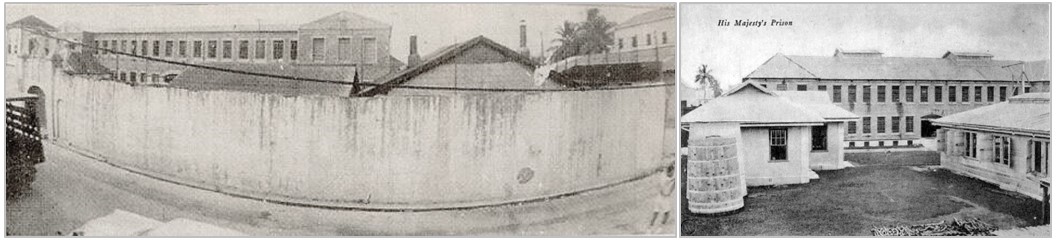
The old Belize gaol built in 1826 on a site at the corner of Albert and Church Streets, opposite the Court House, was destroyed by fire in 1854. It was a cumbrous wooden structure surmounted by a clock-tower. It was replaced by a substantial two-storey brick building built in 1857, situated on Gabourel Lane facing the sea, surrounded by concrete walls enclosing approximately three acres of ground. It was the only real prison of the Colony and known as Belize Prison. The second photo was probably taken between the reign (1936-1952) of King George. His Majesty's Prison is in the back, the other buildings were for chow time and entertainment, and kitchen/bakery.
Capital Punishment and Belize Belize - Universal Periodic Review - Death Penalty - July 2023 This report addresses Belize's compliance with international human rights obligations with respect to the death penalty, excessive use of force, and detention conditions. The report also provides recommendations to address these issues, especially the death penalty, in Belize. Belize carried out its last execution on 1985 and maintains a de facto moratorium (being such in effect though not formally recognized) on executions. Belize's last sentence was handed down in 2005, and by 2023 there are no longer any individuals on death row. The Supreme Court of Belize overturned the death sentence of the last individual remaining on death row in July 2015, finding its imposition in his case unconstitutional. In 2017, the Belize Criminal Code was amended to eliminate a mandatory death sentence for murder. Instead, the current legislation authorizes a sentence of either the death penalty or life imprisonment for murder. This report recommends, among others, that Belize abolish the death penalty, ensure a fair and speedy trial for all persons suspected of committing crimes, guarantee equal protection under the law, and bring detention standards into compliance with international human rights standards. From the Belize Constitution: Prerogative of Mercy: 52.-(1) The Governor-General may, (a) grant a pardon, either free or subject to lawful conditions, to any person convicted of any offence; (b) grant to any person a respite, either indefinite or for a specified period, of the execution of any punishment imposed on that person for any offence; (c) substitute a less severe form of punishment for any punishment imposed on any person for any offence; or (d) remit the whole or any part of any punishment imposed on any person for any offence or of any penalty or forfeiture otherwise due to the Crown on account of any offence. (2) The powers of the Governor-General under subsection (1) of this section shall be exercised by him in accordance with the advice of the Belize Advisory Council. Procedure in Capital Cases: 53. Where any person has been sentenced to death (otherwise than by a court-martial) for an offence, the Attorney-General shall cause a written report of the case from the trial judge (or the Chief Justice, if a report from the trial judge cannot be obtained), together with such other information derived from the record of the case or elsewhere as he may require, to be taken into consideration at a meeting of the Belize Advisory Council, so that the Council may advise the Governor-General whether to exercise any of his powers under section 52 (1) of this Constitution.
 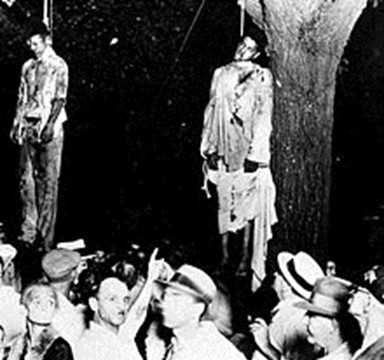
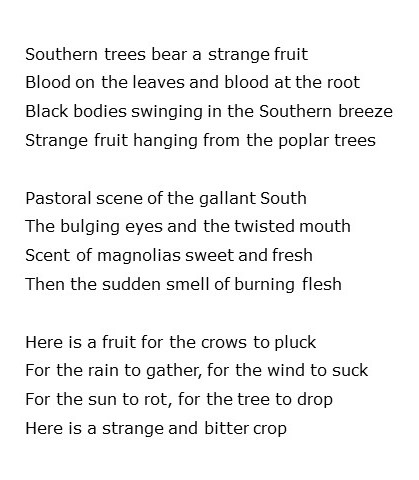
‘Hangings’ have been a part of Man’s history and, many times, the hanging was done for crimes not committed. In March 1939, a 23-year-old Billy Holiday walked up to the mic at West 4th's Cafe Society in New York City to sing her final song of the night. Per her request, the waiters stopped serving and the room went completely black, save for a spotlight on her face. And then she sang, softly in her raw and emotional voice: "Southern trees bear a strange fruit, Blood on the leaves and blood at the root, Black body swinging in the Southern breeze, Strange fruit hanging from the poplar trees..." Holiday popularized "Strange Fruit" and turned it into a work of art, but it was a Jewish communist teacher and civil rights activist from the Bronx, Abel Meeropol, who wrote it, first as a poem, then later as a song. His inspiration? Meeropol came across a 1930 photo taken by Lawrence Beitler, that captured the lynching of two Black men, Thomas Shipp and Abram Smith, in Marion, Indiana. The visceral image haunted him for days and prompted him to put pen to paper where he expressed his horror at lynchings. For a powerful rendition of Strange Fruit by Belizean Fayemarie Anderson-Carter, our daughter, go to the link below. The words of Strange Fruit are also printed so you may fully partake in the remembrance of these murders: https://static1.squarespace.com/static/571c59d07c65e4606a84bf6a/571cfa8520c6472939a73755/571cfc39f699bbdfbf73dd7d/1461526824038/Strange+Fruit+%E2%80%93%C2%A0MIX.m4a
BOOKS ALREADY PUBLISHED: 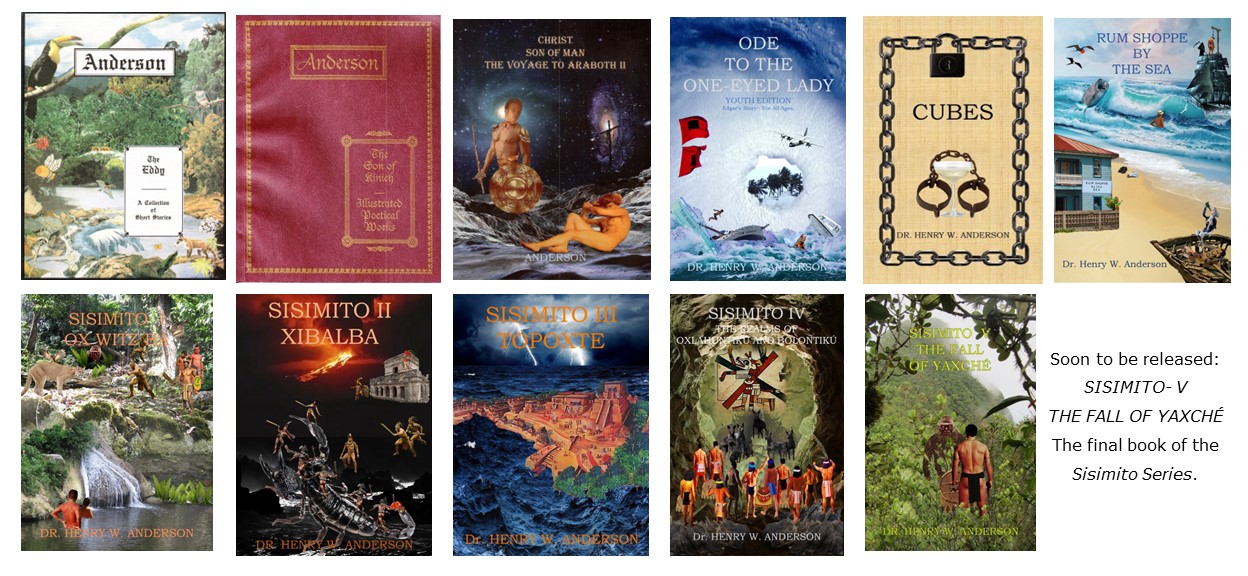
INFORMATION LINKS: The works by Dr. Henry W. Anderson are available as E-books and Print-on-Demand at store.bookbaby.com (BookBaby Bookshop), recommended, and other worldwide retailers: E-Book Retailers: Amazon, Barnes & Noble, Apple Books, Vearsa, Kobo, OverDrive, Copia, Gardners Books, Baker & Taylor, eSentral, Scribd, Ciando, hoopla, Playster, and many more. Print-on-Demand Retailers: Amazon, Barnes & Noble, Powell’s and thousands of other stores and wholesale bookstore catalogs like Ingram and Baker & Taylor, around the world. For store.bookbaby.com, go to: https://store.bookbaby.com/profile/jabirubooksbelizecom Please note that our Newsletters are also published on our FaceBook page at https://www.facebook.com/JabiruBooksBelize Visit our website at http://jabirubooksbelize.com

|