|
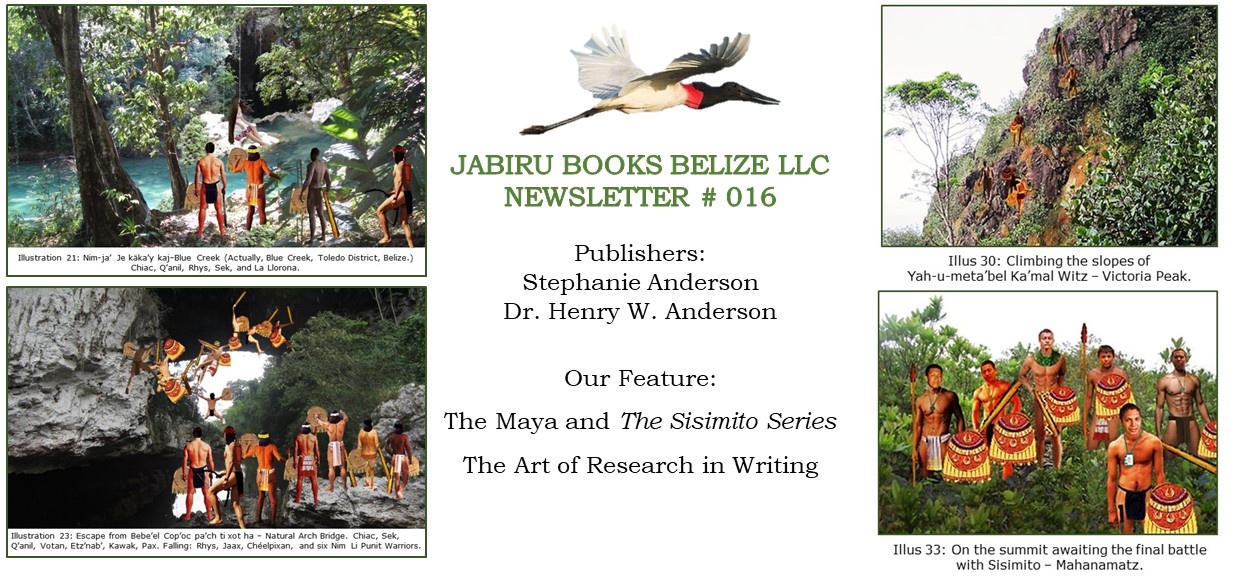
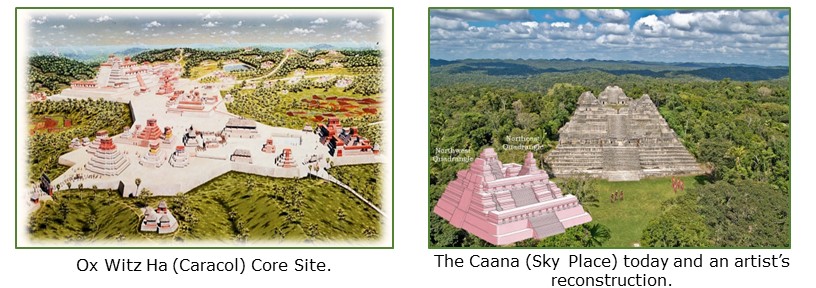
DOING RESEARCH You cannot do too much research. In the military, it is often said that time spent gathering intelligence is seldom wasted. The same concept applies in writing a novel. You never know what little detail will give a scene the ring of authenticity. You can leave some things out. If you do thorough research, you'll find more material than you need, and no reader likes a data dump. It is for this reason that The Sisimito Series has hundreds of Notes and a very informative Front Material and Appendix which provide further information on the subject matter of the novels. To include them in the story itself would overwhelm the reader and slow down the pace necessary to keep the story moving. Whether you’re writing what you know or pursuing a fresh passion, research is a critical tool for developing the world of your novel. What you learn during research will allow you to immerse your reader fully in your setting. It will guide you in developing your characters and plot. How does a writer research a subject in which they don’t personally have firsthand experience? Start with the question: “What do I want to know?” It draws forth your best energy with the desire to learn more about things that you don’t know about in the subject of which you are writing. Read everything. The preliminary stage of research is generally exploratory so read everything you can about it. As you go deeper, you’ll find your research becoming more focused. You’ll begin asking questions about particular locations, histories, or scenarios that involve your subject matter. At this point, your interests will not only guide your choice of materials, they will also help you begin structuring your novel. Take notes, use bookmarks, record page numbers, and cite your sources as you research. Newspapers, magazines, Wikipedia, an online search engine, and your local library are all great resources in this endeavor. Google Maps can be a handy tool for geographic research. Watch documentaries and listen to podcasts as these media can contain as much research as a traditional book or piece of print journalism. Reach out to others who may have an interest in the subject you are writing about. Talking to people offer perspectives that you won’t find in books, and it can transmit an enthusiasm and authenticity that will come through in your writing. Meeting people in person may also inspire ideas for your characters. Visit the locations you are writing about, if at all possible, or authenticity may be sacrificed. When writing The Sisimito Series, I once stated that a Warrior jumped into a river. When I later visited the river, I found out that no one could jump into the river at that point as it was filled with slabs of stone. One had to walk in. When you first arrive at the location, don’t immediately record or photograph or write anything down, just spend some time absorbing it through your senses. Pay attention to the things that strike you most. Go home later and write a description of the place. Remember to include the sensory details—what it felt and smelled and sounded like. Although one may wish to write about various subject matters, it is always good to follow your interests. Trust your own tastes. You’re going to be working with these subjects for a long time, so choose things that interest you enough to sustain you over the course of a novel. Some information from MasterClass/Readers Digest. THE SISIMITO SERIES The Sisimito Series belongs to two different worlds and times; yet, those worlds are in the same geographical area. The first is that of Sgt. Eutimio Chiac, aka Stephen Chiac, a Soldier in the British Honduras Volunteer Guard, now the Belize Defence Force, the first novel is set in AD 1973. The second occurs in AD 633 as the Maya Civilization was approaching its height. It is centered at Ox Witz Ha (Caracol) which was under the rule of K’an II, aka Ruler V, Lord Stormwater Moon, Antenna Top II, at the time. K’an II was born 18 April 588, his accession was 6 March 618, and his death 21 July 658. The Sisimito Series brings the adventures of Stephen (Eutimio) Chiac, a Belizean soldier, a Sergeant, and Molly Cervantez, a teacher, to the forefront of Belizean Literature and that of the entire Americas. It takes you into the mysterious and pristine jungle of the Cockscomb Basin, Belize, and into the dangerous world of the dreaded Sisimito (Mahanamatz) and the Jungle Folk characters, the Kechelaj Komon. Journey with them through the magnificent Maya city of Ox Witz Ha (Caracol), the world of Maya Cosmology–Yaxché, and the Place of Fear, Xibalba–The Underworld. The Sisimito Series is the most outstanding series written about the Maya, its civilization and mythology, has many beautiful and meaningful illustrations, and extensive Notes. It brings the reader to the Maya Pantheon of Gods and Goddesses, the Kings and Queens, the cities, the people, the languages, the warfare. It is well researched and the timeline is based on Maya historical facts. Once you have read The Sisimito Series, you will have shared in the most wonderful of worlds and the greatest of adventures. The series also provides the reader with a wealth of information about the Maya Civilization, much of which peoples of today are not knowledgeable. It is a series all peoples will find interesting and exciting to read. It should especially be read by our Maya of today so that they can make themselves knowledgeable of the Great Civilization of their Ancestors and be able to pass it on to their children and future generations. The Sisimito Series comprises five books, all self-published, three of which are presently in The Belize Library System. There was an initial book called Sisimito which is no longer in print; it has been replaced by Sisimito I - Ox Witz Ha. The books available at the library are: Sisimito I – Ox Witz Ha Sisimito II – Xibalba Sisimito III – Topoxte The fourth book of the Series, Sisimito IV – The Realms Of Oxlahuntikú And Bolontikú, has already been published and will be available at the Belize Library System shortly. The fifth and final book, Sisimito V – The Fall Of Yaxché, is completed and will soon be published. Other books written by Dr. Anderson are also available at the Belize Library System. 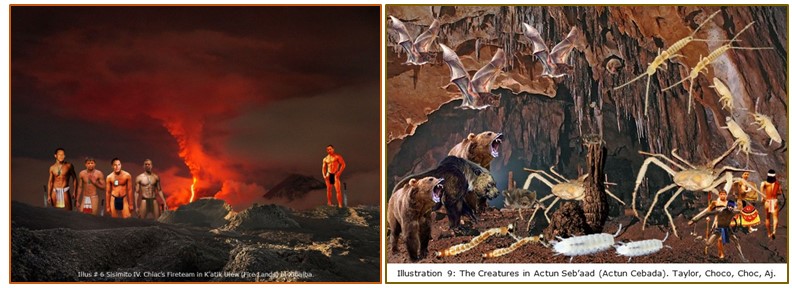
The publishers would like to acknowledge the following for the use of their images in the illustrations: Lt. Noel Lanza as Cpl. Rhys, C; Sgt. J. Baptist. as Pte. Taylor, R; Sgt. D. Pop as Demetrio Choc (Civilian); Sgt. L. Coh as LCpl. Shal, B; Sgt. M. Recinos as Kish; Cpl. Camal, Y as Captain Eutimio (Stephen) Chiac–initially a sergeant; Pte. Choc, R as Pte. Teul, T; Benedicto Choc (Civilian) as Pte. Choco, L. TWO BELIZEAN BOOKS ON THE MAYA
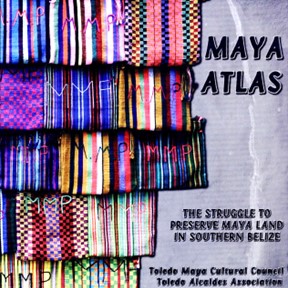
The Maya Atlas was made by the forty-two Ke'kchi and Mopan Maya communities of southern Belize. The maps, text, drawings, photographs and interviews were done by Maya village researchers and cartographers elected by the communities. In their own words and with their own maps, the Maya describe their land and life, the threats to their culture and rain forest, and their desire to protect and manage their own Homeland. The Atlas is an important step in developing a Maya Homeland. The Maya researchers and cartographers made the Atlas so that their communities, young people and leaders would have a comprehensive, village-by-village, regional understanding of the state of Maya natural and human resources and their traditions of living in harmony with nature - what is being lost, and what needs to be preserved and developed. The Atlas is a window to both the ancient and modern Maya world. The Atlas will appeal to people interested in indigenous rights, environmental issues, Latin America, arts, ethnography, traditional knowledge, community-based conservation, and the New Cartography, which involves cartographers assisting local communities to map their own lands and land use. Publisher’s Comments. You may contact the ‘Toledo Maya Cultural Council’ and/or the ‘Toledo Alcaldes Association’ for information on the availability of this important book. We recommend that every Maya household in Belize should have a copy of this book so that the history of the Maya villages in Southern Belize may be passed on to future generations. To purchase this book, you may also go to: https://www.amazon.com/Maya-Atlas-Struggle-Preserve-Literature/dp/1556432569 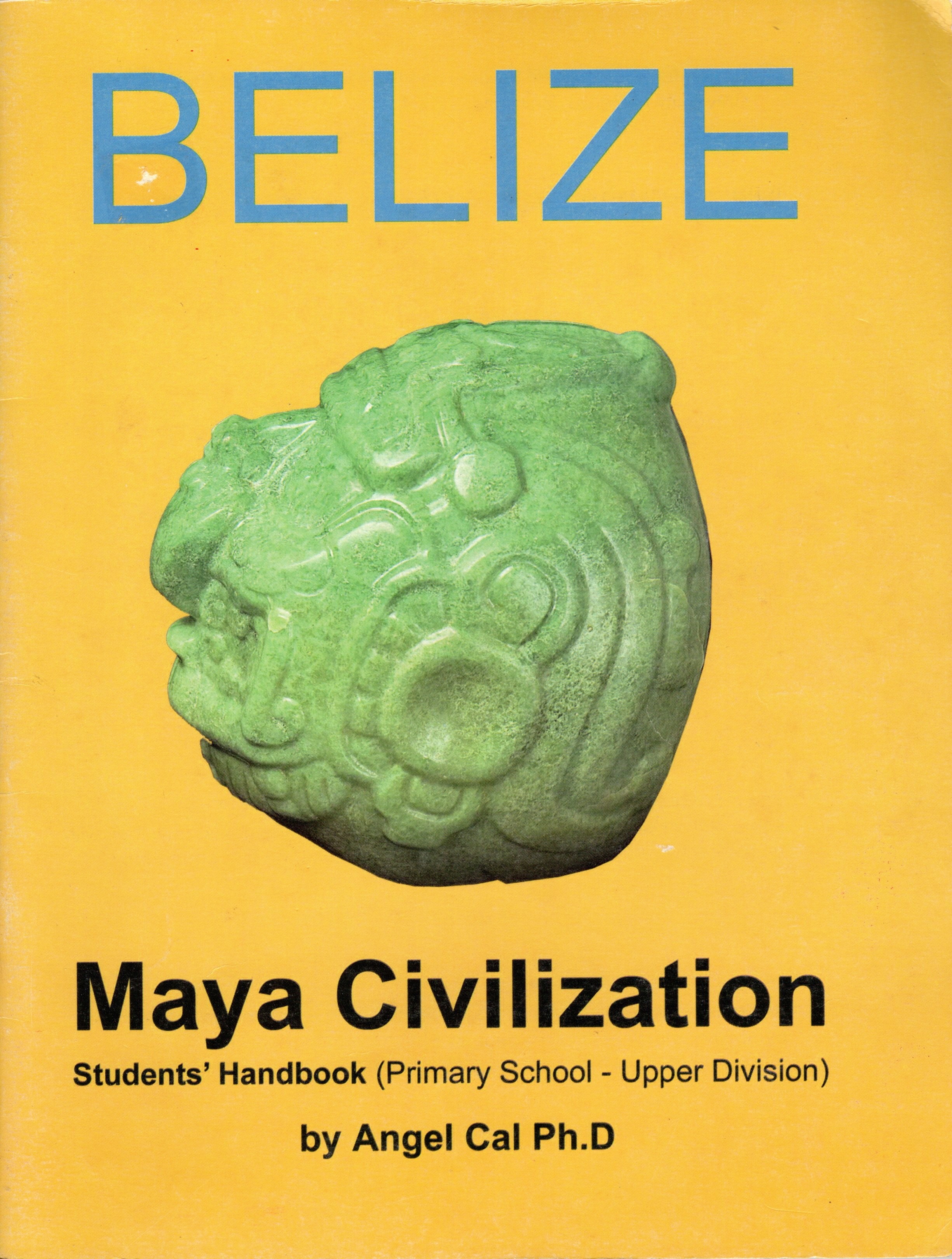 Maya Civilization: A Students' Handbook, Primary Schools, Upper Division; University of Belize 2004. Maya Civilization: A Students' Handbook, Primary Schools, Upper Division; University of Belize 2004.
Angel E. Cal is the former president of the University College of Belize and the University of Belize. He holds a doctoral degree in Latin American History from the University of Arizona and a Bachelor in Education degree from the University of Calgary. Apart from experience of over twelve years in higher education administration, Dr. Cal’s research interests social and economic history of Belize during the 1800’s, ethnohistory and the history of the peasantry in Latin America (2004). He has also published other handbooks on the Maya Civilization for different primary school levels, ‘The Belize Maya and the English to 1847’ and ‘The Caste War and the Maya of Yucatan’ in Readings in Belizean History. For more information on Dr. Cal and his publications, please go to: https://bz.linkedin.com/in/angel-cal-4110a733 BOOKS ABOUT THE MAYA USED IN RESEARCH FOR THE SISIMITO SERIES 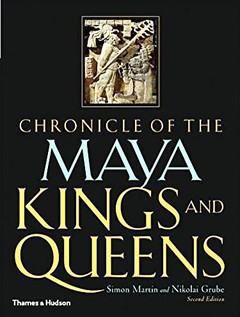 Chronicles of the Maya Kings and Queens; Simon Martin and Nikolai Crube Chronicles of the Maya Kings and Queens; Simon Martin and Nikolai Crube
"The ideal reference on Maya archaeology."―Science News Behind the ancient cities of the Maya and their abandoned artworks lie the turbulent stories of their ruling dynasties. One of the world's greatest and most powerful civilizations, the Maya experienced constant conflict in a landscape divided among numerous kingdoms. Intense rivalries, rapacious conquerors, and repeated dynastic defeat and breakdown are common themes in many tales of this mighty civilization.
The ancient Maya remain one of the most vibrant areas of study in world archaeology. Fresh discoveries in the field, together with the ongoing process of hieroglyphic decipherment, mean that information is constantly coming to light. This new version of the only comprehensive, kingdom-by-kingdom history of the ancient Maya brings the story fully up to date with previously unknown rulers and new glyphic readings, as well as additional information on diplomacy and warfare. 366 illustrations, 86 in color Please note that this book has a fifteen-page chapter on Caracol. 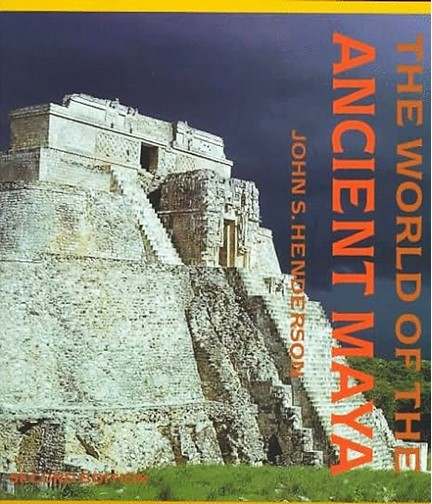
The World of the Ancient Maya
The World of the Ancient Maya gives a general overview of the ancient Maya and begins with summary discussions of the history of Maya studies, the environment and geography of the Maya world, and the European invasion. Text is devoted primarily to a synthesis of the history of Maya cultural traditions based primarily on archaeological data and complemented by epigraphic and ethnohistorical information"--Handbook of Latin American Studies, v. 57.http://www.loc.gov/hlas/ 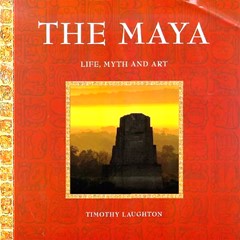
The Maya – Life, Myth, and Art The Maya – Life, Myth, and Art moves deftly from theme to theme to present a fresh appraisal of the cultural and artistic legacy of the Maya, most spectacularly seen at the great temple complexes. From monumental architecture to intricate stone carvings to breathtakingly vivid wall paintings, this lavishly illustrated volume features over 200 images in full color. 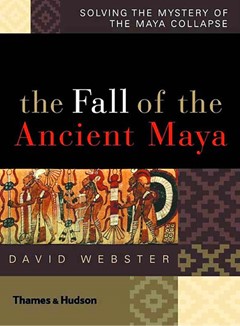
The Fall of the Ancient Maya The Fall of the Ancient Maya is an account of the mysterious fall of the ancient Maya civilization and evaluates current theories and myths, citing sixteenth-century evidence of a residual population and offering a portrait of its Late Classic society beset by overly ambitious nobles, wars, and an exploding population that could not be sustained by its scanty agriculture. POINTS OF INTEREST Kaan Witz vs Doyle’s Delight Kaan Witz: Sky Mountain. This refers to the mountain peak, ‘Doyle's Delight’ in Belize. The name was first coined by Sharon Matola in a 1989 report. The name is based on Sir Arthur Conan Doyle’s book The Lost World (1912), which contains the quote ‘there must be something wild and wonderful in a country such as this, and we're the men to find it out!’ Recently, there has been an attempt to rename the peak Kaan Witz which would be a more appropriate name as it is Maya, Doyle’s Delight being such an unrelated name, but the new name has not gained widespread acceptance. Doyle's Delight as the highest point in Belize. It is 12 feet higher that Victoria Peak; however, it will never replace the awe that the majestic and mysterious Victoria Peak brings. Maya vs Mayan
Maya, Mayas, Mayan: Many people misuse these three terms, assuming that “Maya” is a singular noun, “Mayas” a plural noun, and “Mayan” an adjective. The fact is, the word “Maya” should be used in all three of the above situations, e.g. He is (a) Maya; They are Maya; Maya Calendar. “Mayan” refers to the family of 29 to 32 languages spoken by the Maya. When referring to one specific Mayan language, “Maya” is used, e.g. Yucatec Maya. Empire vs Civilization There was never an Empire in the Maya Civilization. An Empire is defined as an aggregate of many separate states or territories under a supreme ruler or oligarchy, as in the British Empire. Within the Maya Civilization, each Kingdom was its own state, with its own Rulers. BOOKS ALREADY PUBLISHED 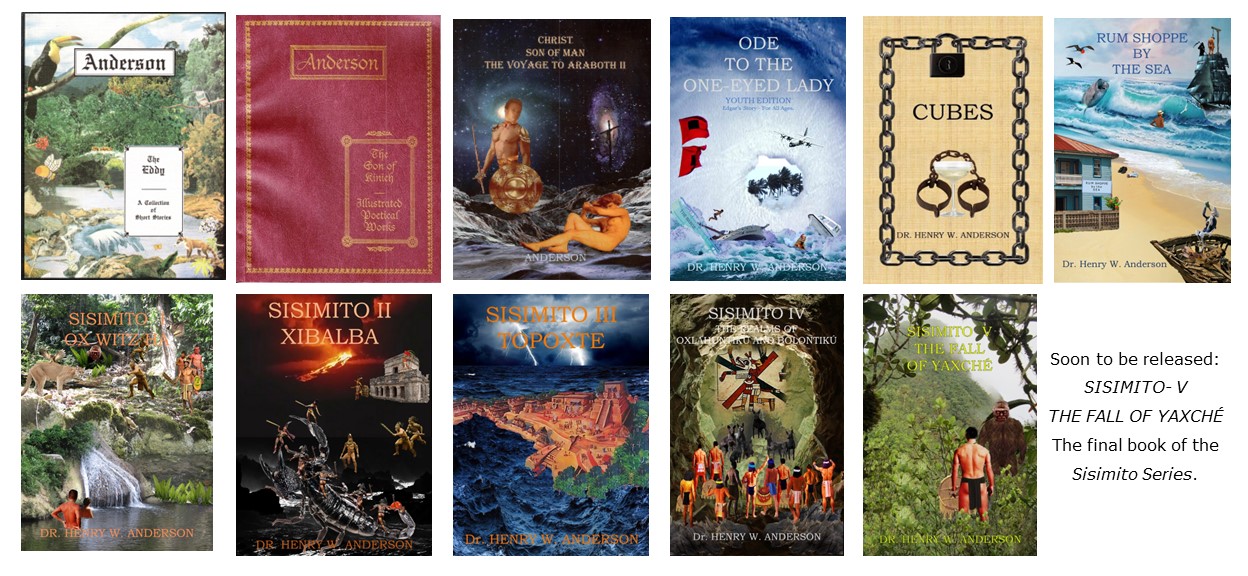
INFORMATION - LINKS The works by Dr. Henry W. Anderson are available at the libraries of the Belize National Library Service and Information System. For more information, please go to: https://www.bnlsis.org/
Dr. Henry W. Anderson books are also available as E-books and Print-on-Demand at store.bookbaby.com (BookBaby Bookshop), recommended, and other worldwide retailers: E-Book Retailers: Amazon, Barnes & Noble, Apple Books, Vearsa, Kobo, OverDrive, Copia, Gardners Books, Baker & Taylor, eSentral, Scribd, Ciando, hoopla, Playster, and many more. Print-on-Demand Retailers: Amazon, Barnes & Noble, Powell’s and thousands of other stores and wholesale bookstore catalogs like Ingram and Baker & Taylor, around the world. For store.bookbaby.com, go to: https://store.bookbaby.com/profile/jabirubooksbelizecom If you know someone who would like to receive our monthly Newsletter, please have them go to CONTACT at our website and send us an e-mail. Please note that our Newsletters are also published on our FaceBook page at: https://www.facebook.com/JabiruBooksBelize Visit our website at http://jabirubooksbelize.com.
|