 Benefits of Reading Books: How It Can Positively Affect Your Life Strengthens the brain; Increases empathy; Builds vocabulary; Prevents cognitive decline; Reduces stress; Alleviates depression; Lengthens lifespan; Bypass TV and Social Media; 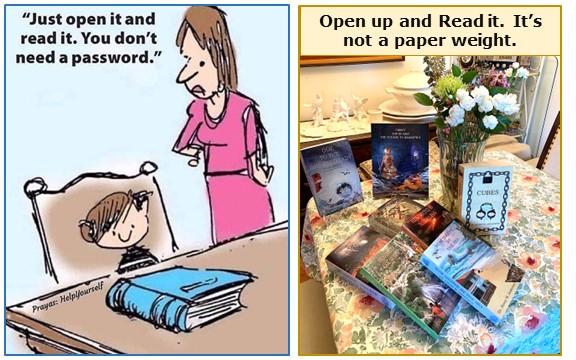 Reading books may have several physical and mental benefits. These include strengthening your brain, increasing your ability to empathize, reducing stress, and building your vocabulary, among others. So, what should you be reading? The short answer is: Whatever you can get your hands on. In the 11th century, a Japanese woman known as Murasaki Shikibu, circa 973 – 1014 or 1025, Japanese novelist, poet, and Lady in Waiting at the Imperial court in the Heian period, wrote The Tale of Genji, a 54-chapter story of courtly seduction believed to be the world’s first novel. It was written in Japanese. Over 1,000 years later, people the world over are still engrossed by novels—even in an era where stories appear on handheld screens and disappear 24 hours later. What exactly do human beings get from reading books? Is it just a matter of pleasure, or are there benefits beyond enjoyment? The scientific answer is a resounding “yes.” Reading books benefits both your physical and mental health, and those benefits can last a lifetime. They begin in early childhood and continue through the senior years. Here’s a brief explanation of how reading books can change your brain — and your body — for the better. For the full article, please go to: https://www.healthline.com/health/benefits-of-reading-books
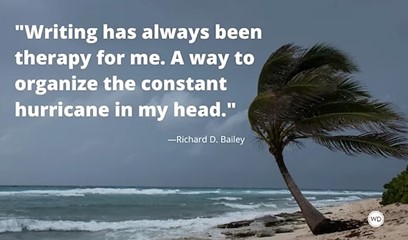 Writing has always been therapy for me. A way to organize the constant hurricane in my head. It helps me define my fears, which, once defined, no longer seem to pose a threat. In other words, once I know what I am afraid of and have thought out the consequences, I am no longer afraid. - Richard D. Bailey (Writer’s Digest) Read A Book: Sedentary behavior means spending time seated or inactive. Relaxing is important, but so is regular exercise and body movement. Any screen time, including time on Social Media, encourages people to stay sedentary for long periods of time. A heavy Social Media user may be sedentary for hours at a time, every day. A sedentary lifestyle has negative effects on your circulation, muscle tone, bone health, and immunity. Too much time online can start to look like a gambling disorder or a substance use disorder. False news stories spread faster on social media than true stories. This means social media users are more likely to see misleading headlines, misinformation, and fake news stories. Incorrect information can have negative and even dangerous consequences. It affects the decisions people make about their health, finances, product purchases, and more. Frauds such as business/investment scams, online shopping scams, and romance scams are common. Social media usage can also result in poor mental health and well-being especially in teens, poor self-image, depression, and anxiety symptoms. The human brain enjoys activities that give them "feel good" chemicals. Reading a book does this. Try it.  Writer's Block 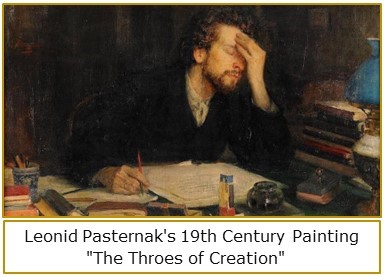 ‘Writer's block’ is a non-medical condition, primarily associated with writing, in which an author is either unable to produce new work or experiences a creative slowdown. Writer's block has various degrees of severity, from difficulty in coming up with original ideas to being unable to produce work for years. This condition is not solely measured by time passing without writing, it is measured by time passing without productivity in the task at hand. Writer's block has been an acknowledged problem throughout recorded history. However, not until 1947 was the term writer's block coined by the Austrian psychiatrist Edmund Bergler. All types of writers, including full-time professionals, academics, workers of creative projects, and those trying to finish written assignments, can experience writer's block. The condition has many causes, some that are even unrelated to writing. The majority of writer's block researchers agree that most causes of writer's block have an affective/physiological, motivational, and cognitive component. Studies have found effective coping strategies to deal with writer's block. These strategies to remove the anxiety about writing range from ideas such as free writing and brainstorming to talking to a professional. (Wikipedia) For the full article please go to:
https://en.wikipedia.org/wiki/Writer%27s_block NOTE: Do not mistake Writer’s Block for Writer’s Laziness Publisher’s Note: Should you wish to comment on our Newsletters, offer suggestions, please go to our Website and to the ‘Contact’ button. BOOKS WRITTEN BY DR. HENRY W. ANDERSON 
INFORMATION/LINKS The works by Dr. Henry W. Anderson are available at the libraries of the Belize National Library Service and Information System. For more information, please go to: https://www.bnlsis.org/ Once on the website, you may go to ‘Public Library Catalogue’ then to ‘Subject;’ select ‘Author’ and put in Henry Anderson; or use the link below to go directly to Dr. Anderson books: https://bnlsis.mlasolutions.com/m5/catalog/(S(tsaodaxofc2mvp3zhpl4wwt2))/Default.aspx?internal=1&installation=LeoBradley Dr. Henry W. Anderson books are also available as E-books and Print-on-Demand at store.bookbaby.com (BookBaby Bookshop), recommended, and other worldwide retailers: E-Book Retailers: Amazon, Barnes & Noble, Apple Books, Vearsa, Kobo, OverDrive, Copia, Gardners Books, Baker & Taylor, eSentral, Scribd, Ciando, hoopla, Playster, and many more. Print-on-Demand Retailers: Amazon, Barnes & Noble, Powell’s and thousands of other stores and wholesale bookstore catalogs like Ingram and Baker & Taylor, around the world. For store.bookbaby.com, go to: https://store.bookbaby.com/profile/jabirubooksbelizecom If you know someone who would like to receive our monthly Newsletter, please have them go to CONTACT at our website and send us an e-mail. Please note that our Newsletters are also published on our FaceBook page at: https://www.facebook.com/JabiruBooksBelize Visit our website at http://jabirubooksbelize.com 
|